
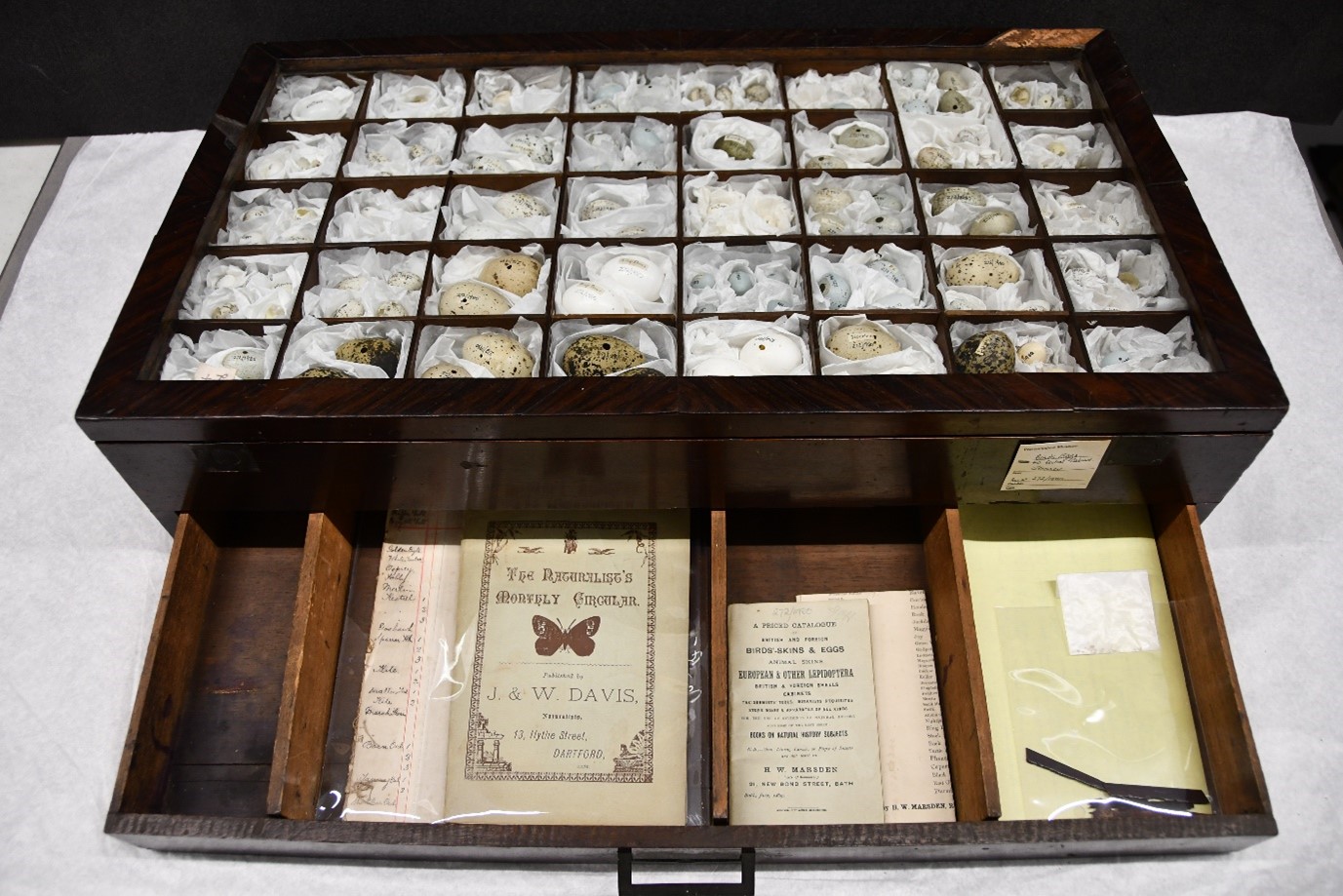
Following on from our last blog regarding the eggs donated by Miss Greener, we are now going to investigate what else the cabinet contained. From its shape, it was obvious there was something below the egg ‘tray’ and on turning the cabinet around, we were able to make out a very discoloured brass drawer handle. On opening it we discovered it was a divided drawer.
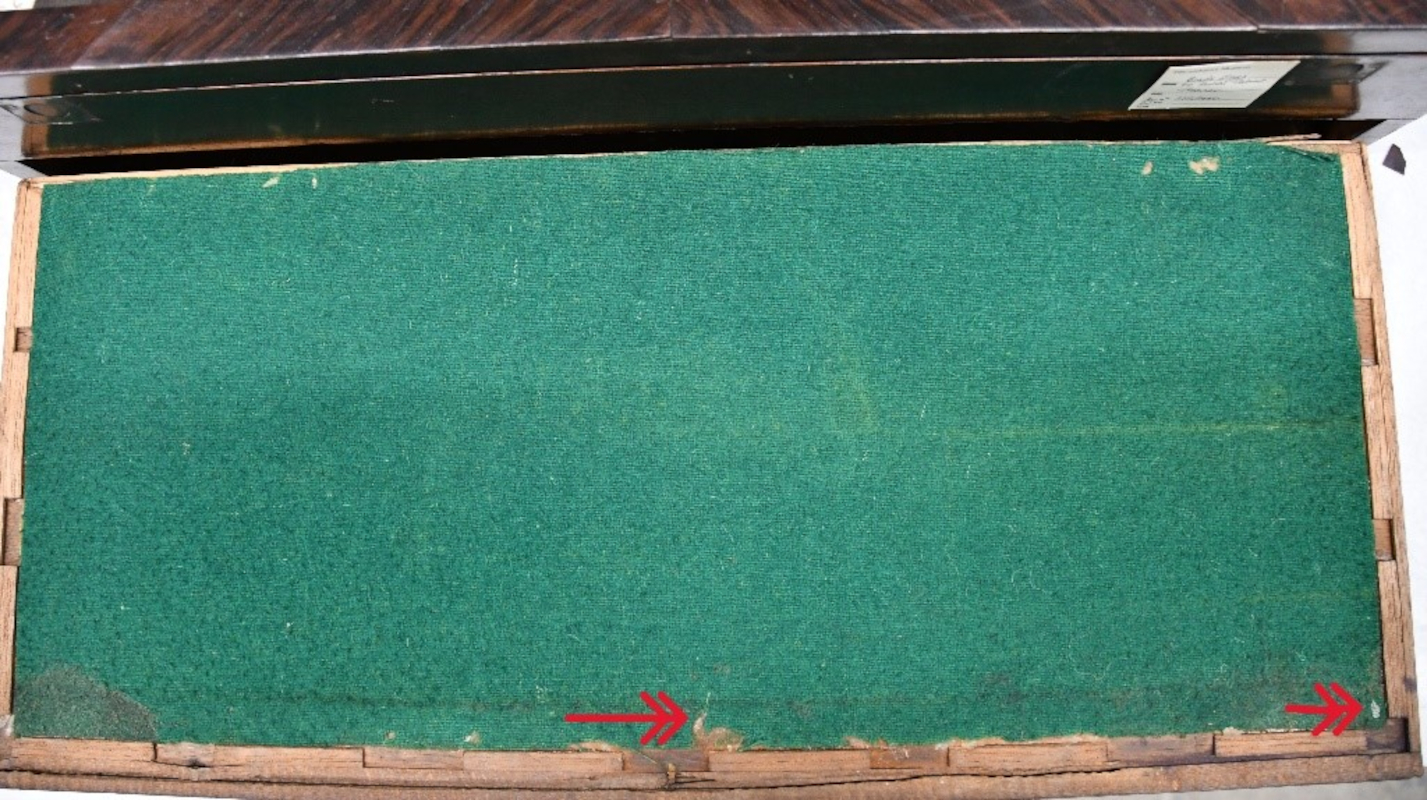
Having carefully removed the eggs, we then removed the drawer itself and discovered that it had a felt base which the moths had enjoyed!
More cleaning needed
So, the cleaning phase of the project wasn’t completed. The condition of the drawer meant we had to deal with this first before looking at the documents. Using tweezers and a museum vacuum, the remains of the webbing moth, which had made their home in the felt, were removed and the drawer sealed in plastic sheeting and frozen for two weeks.
The red arrows on the photo indicate some of the moth damage.
Lily also vacuumed the drawer runners. We also noted that the base of the cabinet was very delicate and would need extra support when being returned to its long-term storage location.
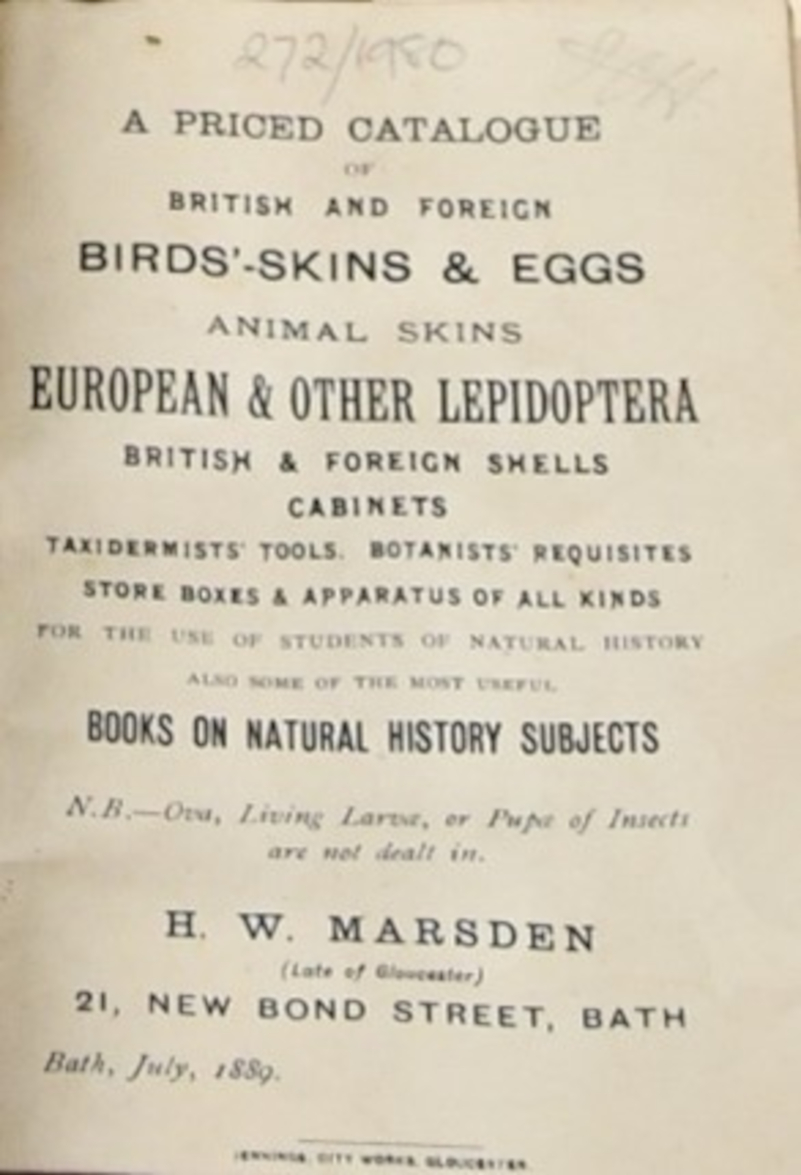
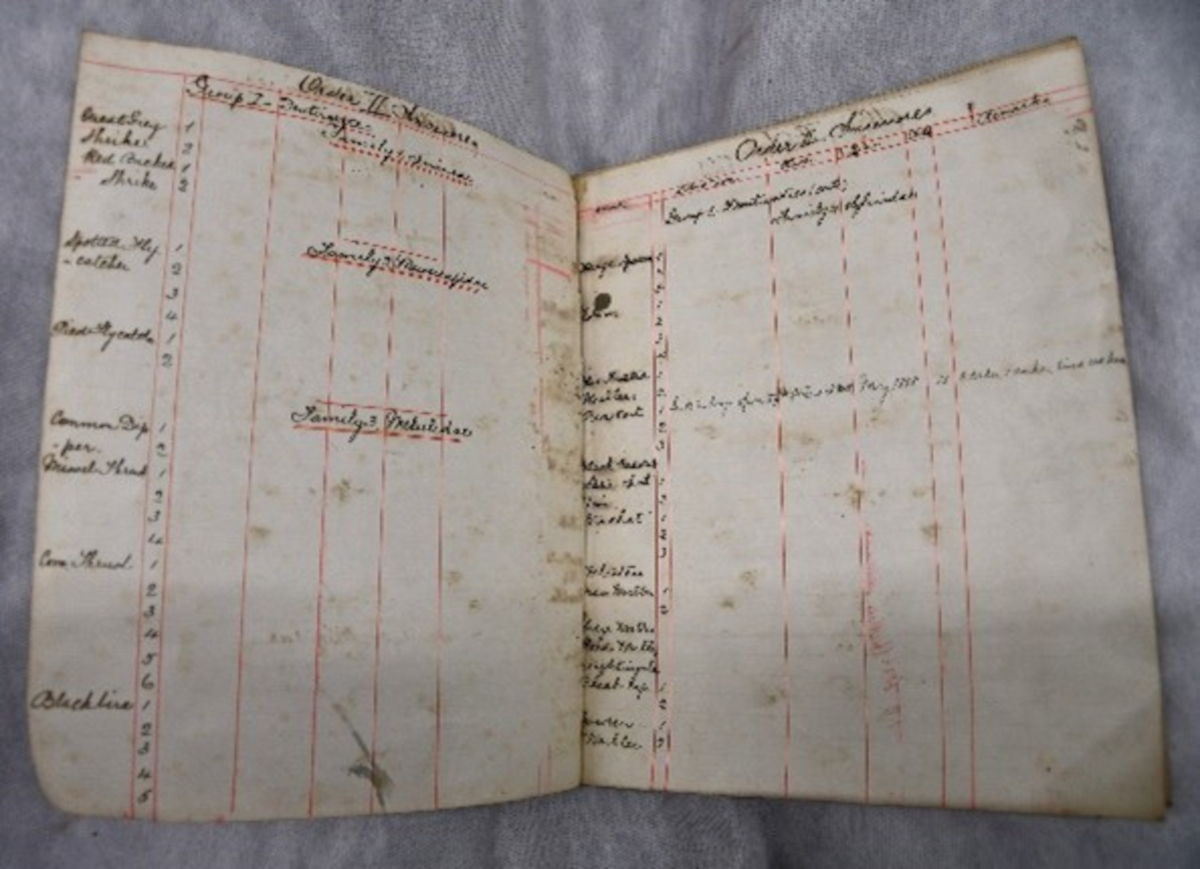
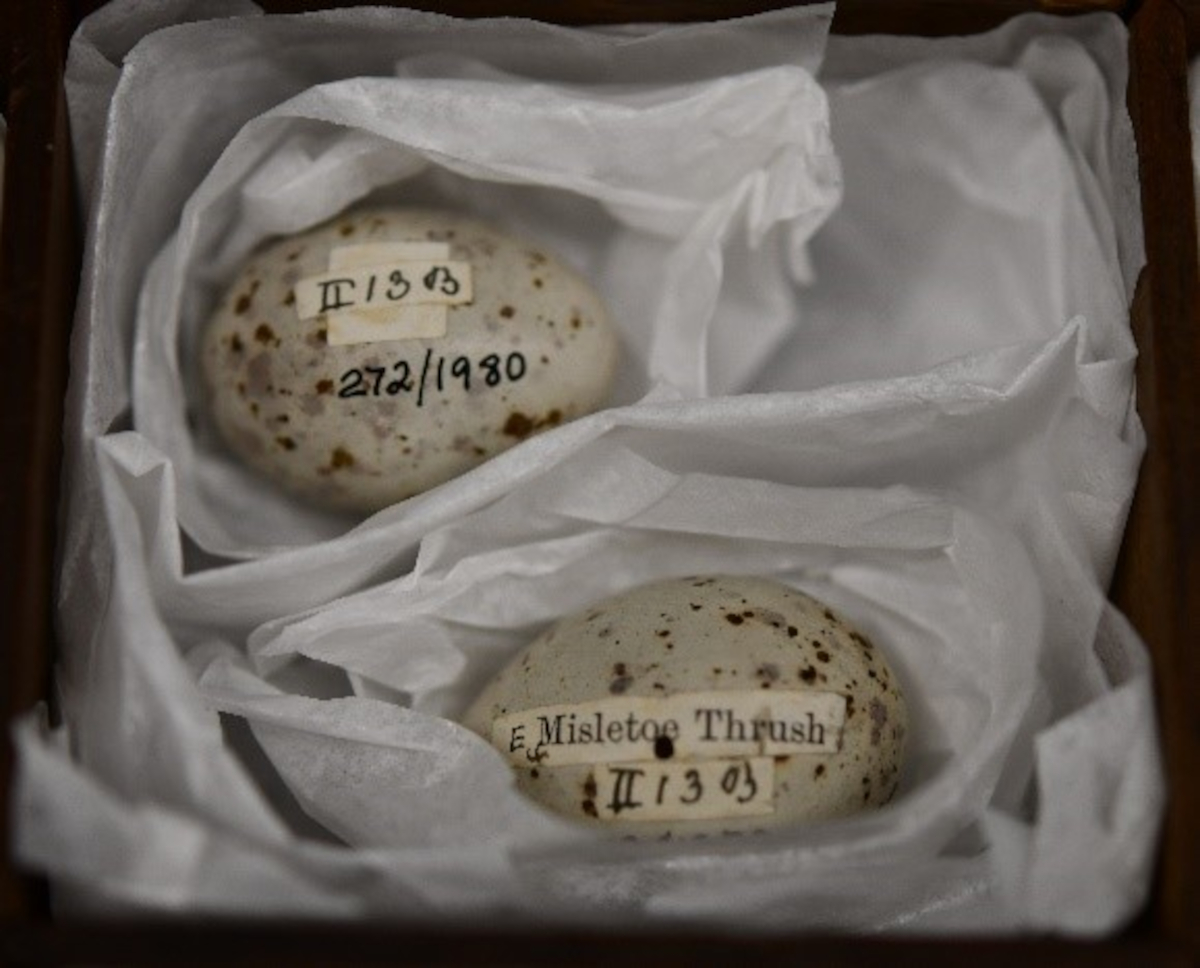
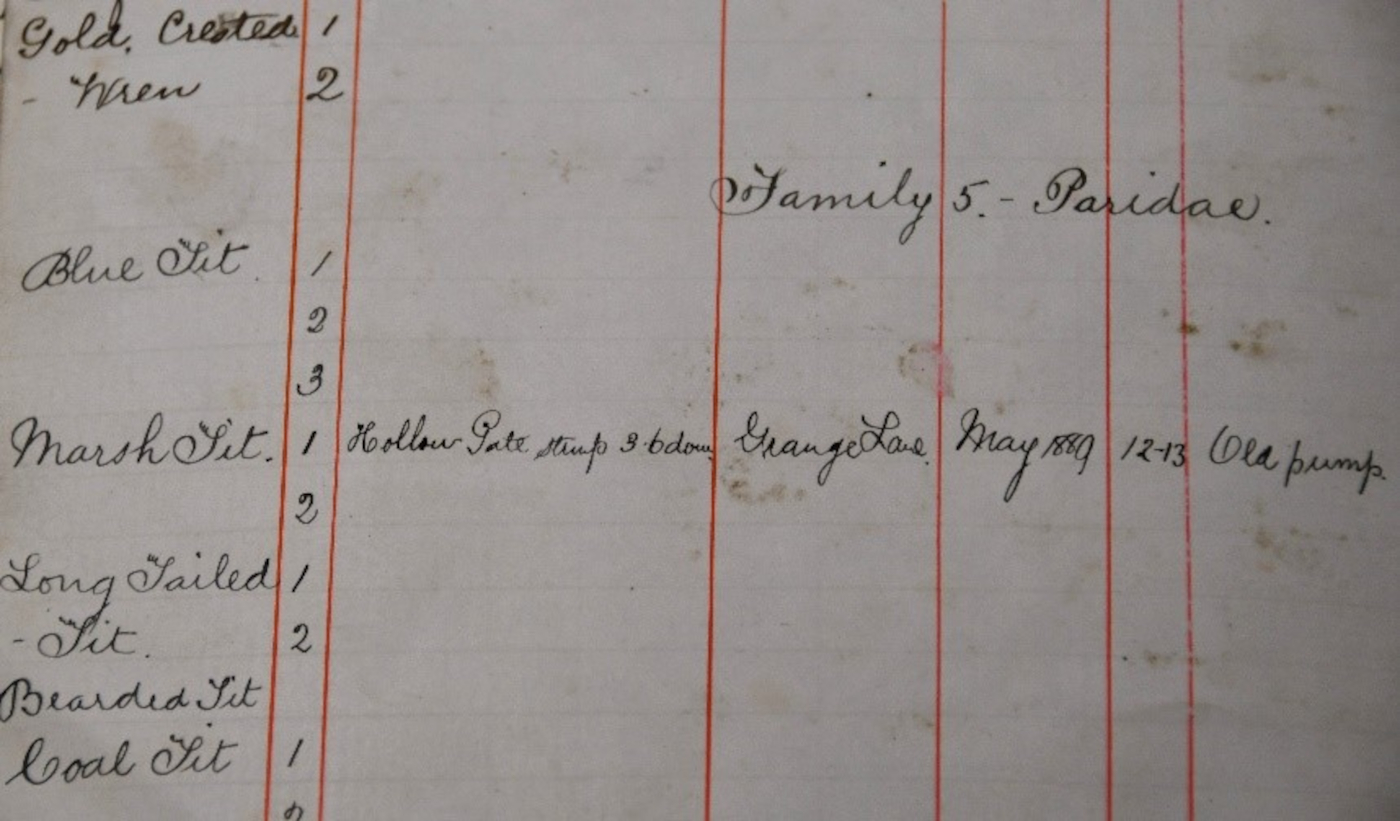
So what was in the drawer? ‘The Naturalist Monthly Circular’ and ‘A Priced Catalogue of British and Foreign Birds Skins and Eggs’ and most excitingly, a hand-written notebook of the eggs collected by Arthur Greener, the donor’s father. The notebook contained headings and columns so that the Order, Family, Situation, Place Time Cllted [Collected] and Remarks could all be recorded. Our curator wondered if the information in the notebook could be matched with the eggs in the tray. Some of the eggs have tiny pieces of paper stuck on the shell with their identification and numbers (some in roman numerals), as well as the accession numbers applied directly to them by a previous brave and dexterous natural history curator.
An insight into a life
In most cases there was no definitive way of matching the collector’s list with those eggs now stored in the cabinet. This was disappointing. However, some of the details in the notebook lead to a fascinating insight into the life of Arthur Greener, the collector – he had recorded where he had taken his eggs from. Lily and I decided to find out more about who Mr Greener was and where he lived. With the help of another volunteer, Jane D, we discovered that he was related to our other natural history volunteer Jane O, and that he had important links to industry in the West Midlands. We’ll reveal more in our final blog.





Comments
Add a comment about this page