
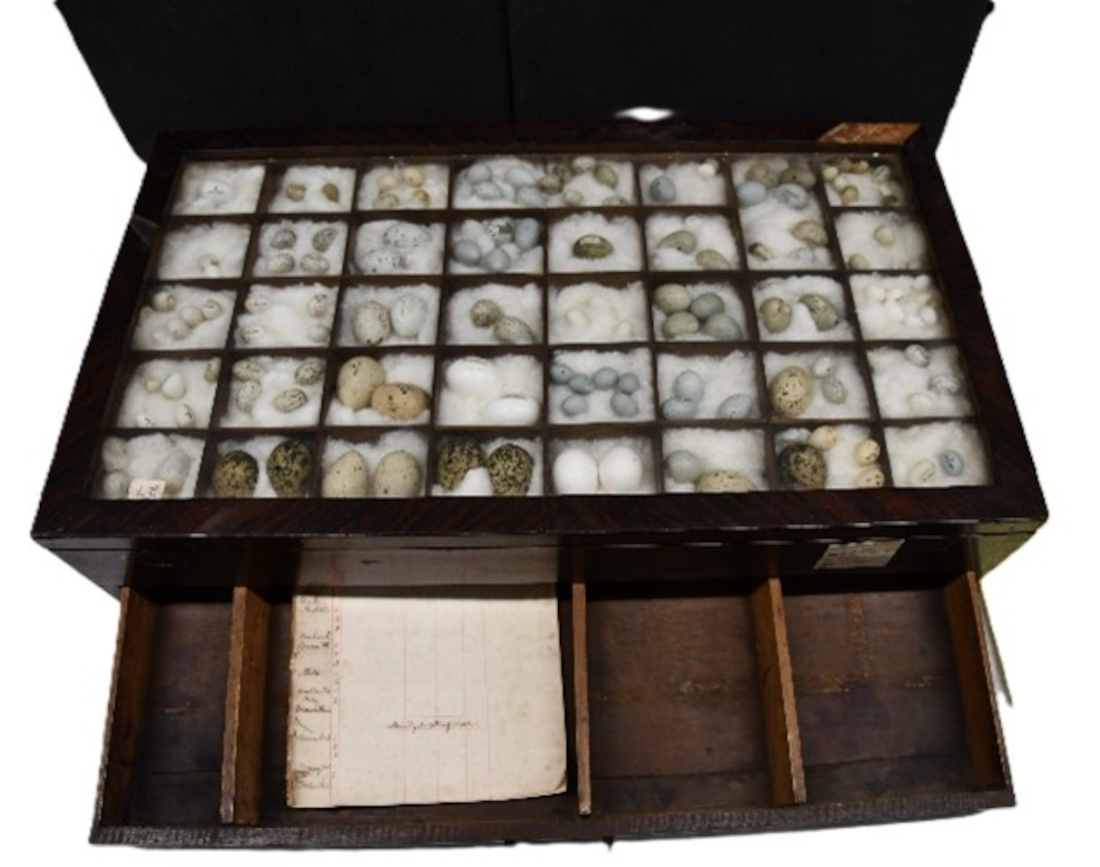
For the past few months Lily, one of our natural history volunteers at Warwickshire Museum, has continued the work of re- packing our egg collection. This is a huge project and one which requires great patience, dexterity and thought. We decided we would do a mini-series of blogs to record the whole process, and this is the first one. The reasons for this project being undertaken are to update our collections management records with both data and digital images and to improve the care of the collection.
Egg collections are vulnerable to pests such as woolly bears, being damaged by being kept in non acid free packing, and becoming disassociated from their donor details. As you will see we came across some of these issues.
An egg donation
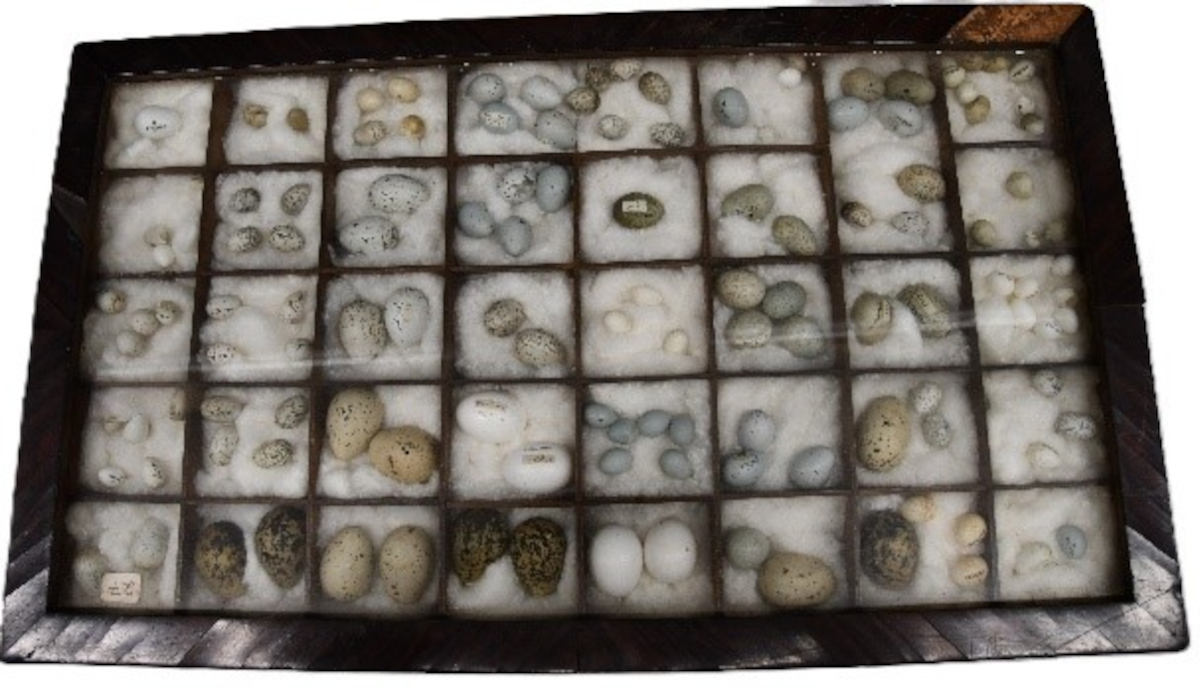
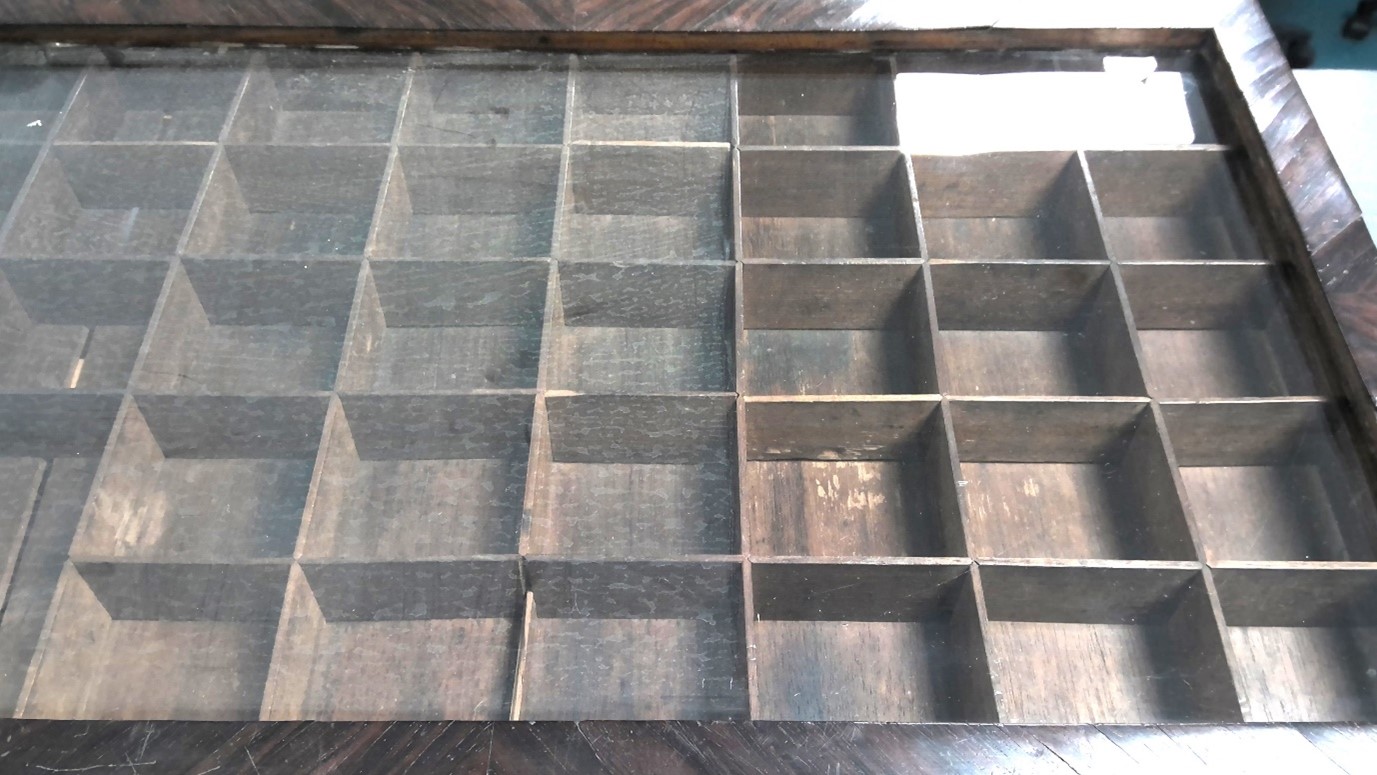
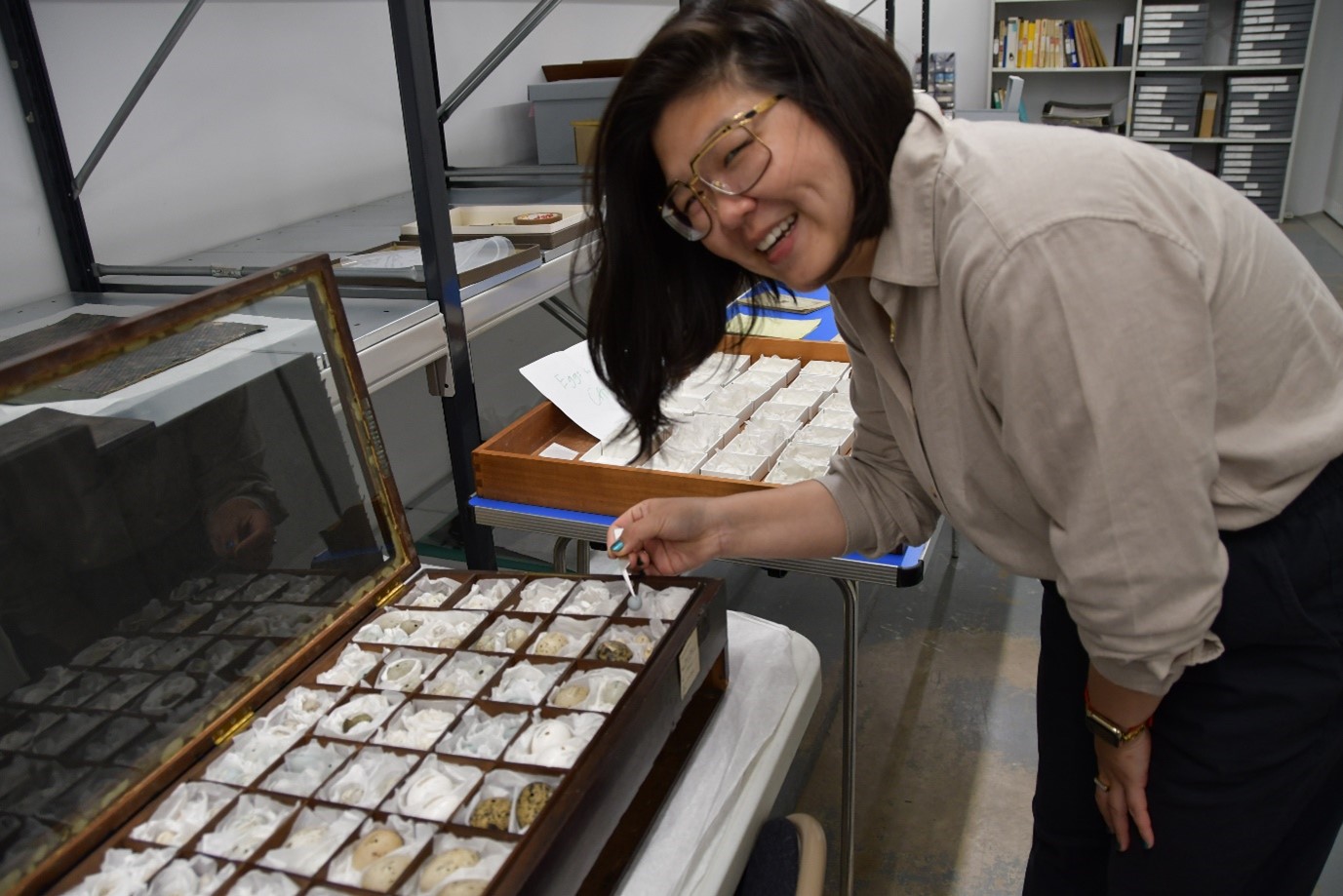
The egg donation by Miss L. Greener is housed in a lovely, veneered purpose-built veneered wooden display case complete with drawer. Before work commenced, the collection was photographed to provide a reference point for any subsequent changes to the arrangement of eggs. Then an assessment was made of the work required.
The physical work involved re-packing the eggs and cleaning the actual display cabinet. As far as possible the original boxes or cabinets were retained, with any materials used to nest the eggs removed and replaced with fresh acid-free tissue. This provides the cushioning and protection needed without harming the eggs as they have calcareous shells; they are made from calcite, which means that anything acidic which comes in to contact with them will ultimately cause damage. The tissue is also safe for the wooden cabinet.
Devising a replica
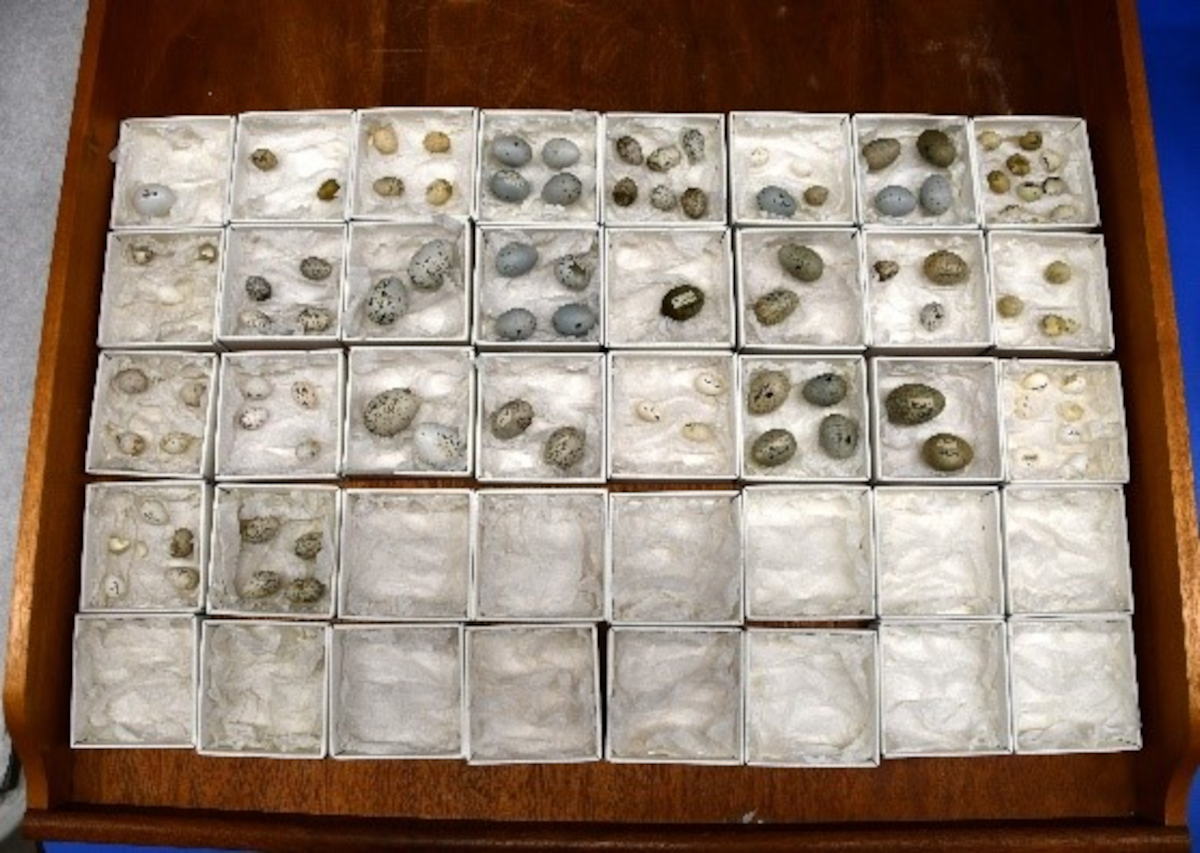
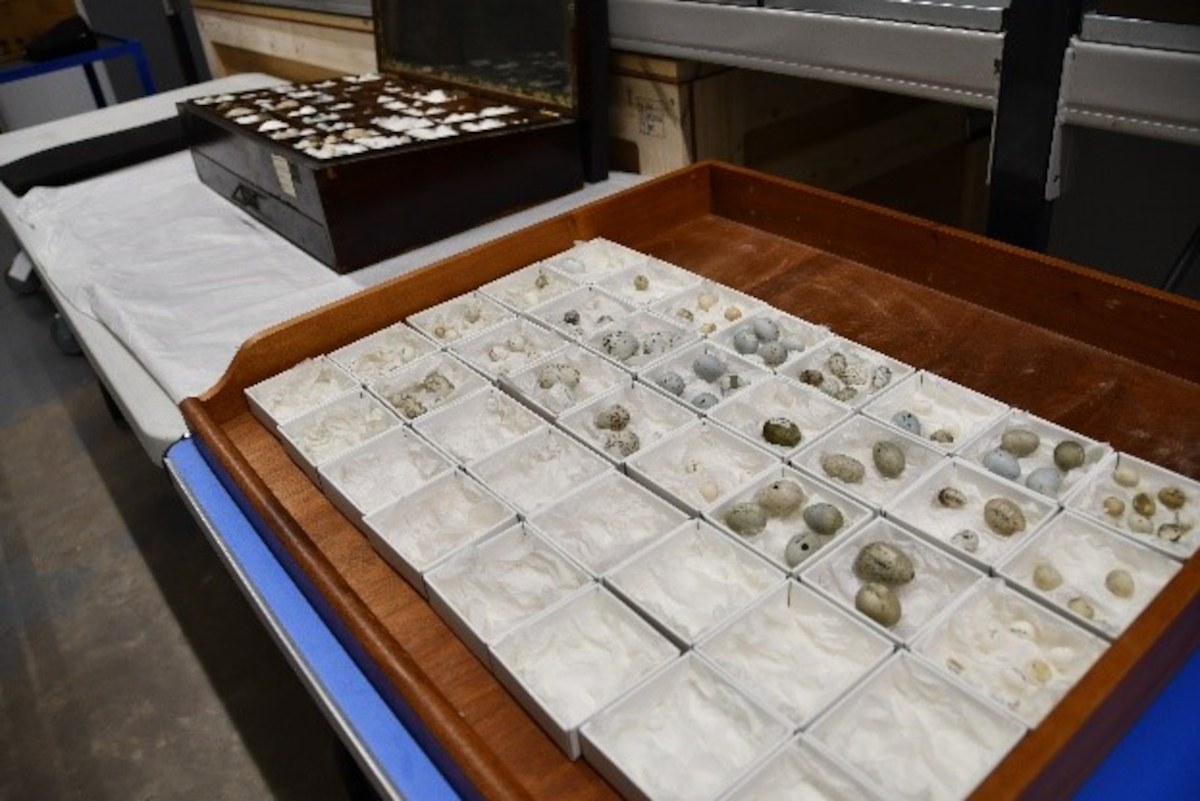
As this collection was so large, Lily devised a replica of the cabinet using a large tray and small acid free boxes so that each group of eggs could be safely removed and put into a co-ordinating position. Each temporary ‘home’ required ‘nesting’ with acid-free tissue.
As the eggs were removed, they were cleaned with a soft brush. Some of the shells had tiny particles inside them and these were gently removed with tweezers. Having established if they were pieces of egg or dirt they were appropriately kept or discarded. The original cotton wool nesting was discarded as it had degraded and housed several woolly bear skins or exuviae, indicating a previous pest issue.
What is a woolly bear?
‘Woolly bear’ is the common name given to the larvae of the carpet beetle; they are tiny and very hairy. They eat fur, feathers, silk and skins so are generally a threat to most natural history collections. The larvae had probably fed on remnants of the egg. Normally if we discover a pest issue, we would freeze the object for 14 days in order to break their life cycle and to kill them. As we didn’t want to put the eggs through the potential stress of freezing and defrosting, and we were fairly certain the issue was historical, we placed the eggs in their temporary home in a sealed plastic bag with a sticky pest trap for a week to re-assure us of our assumption. Thankfully we were correct.
Cleaning the cabinet
Once this was done, a museum vacuum was used along with a stiffer brush to clean each section of the cabinet. De-ionised water was used with cotton pads and buds to carefully clean the glass. It had clearly been wiped before as there were dirty water marks on it. Using de-ionised water would mean that we would remove as much of this residue as possible without adding any further chemicals to the surface of the glass.
Once the cleaning was completed, Lily had to re-home the eggs. She made nests from acid-free paper and tried to ensure no one egg was in contact with another. Overall Lily calculated that it took on average 20 minutes to prepare and complete each compartment.





Comments
Add a comment about this page