

My Lord Brooke beinge but uppon same daye com to towne, and resolving to goe downe this daye fore Warwicksheare as he told me hime selfe, was arrested heance by his servant Rafe Haywood who ….stabbed him into two places in the leaft side … the surgeants (surgeons) dowbteth maye teynt the midrife or goe downe into the guts and perish some of them, which if have not don, thear is hope of him, if otherways the wound is mortal
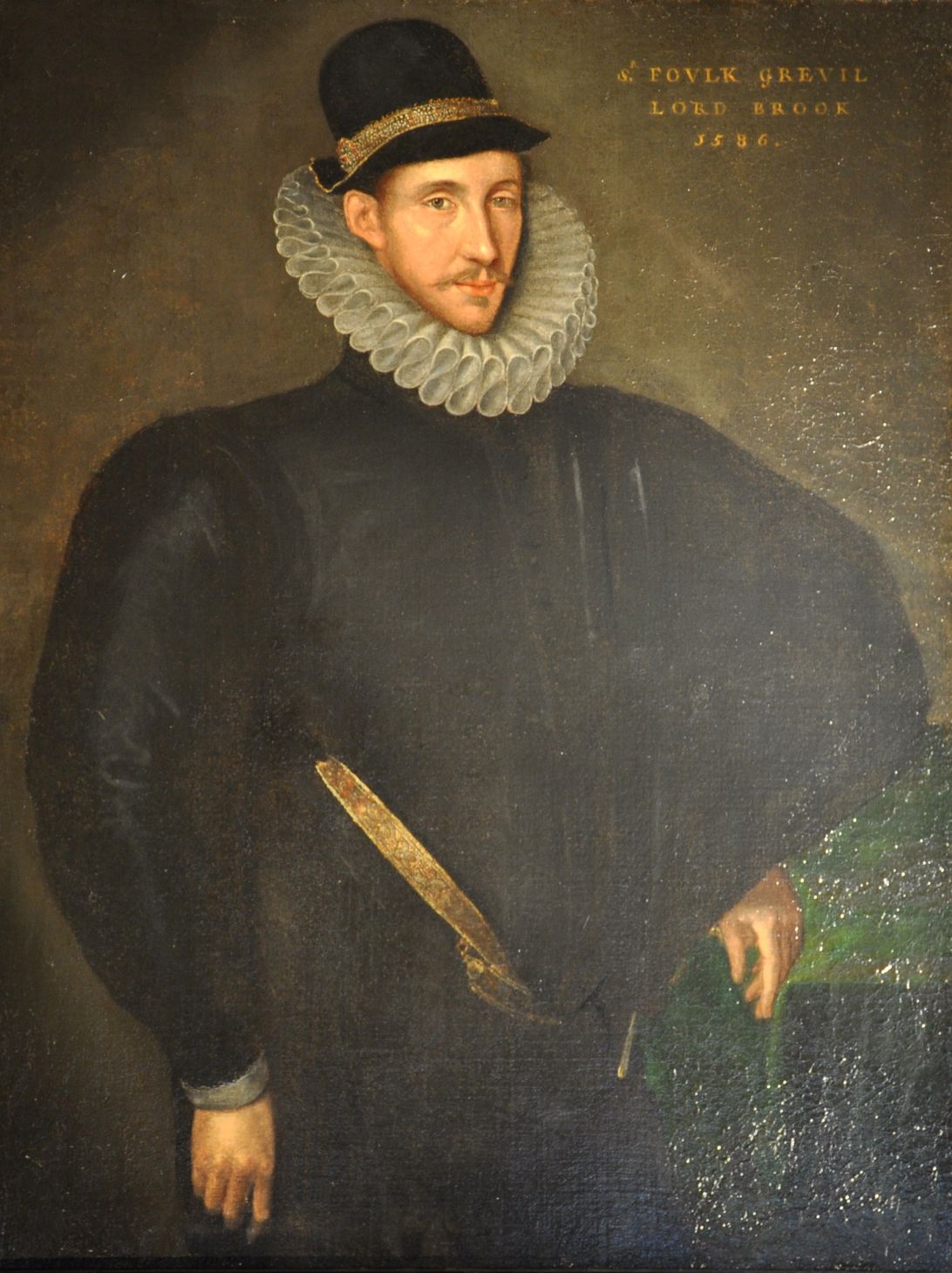
This is an extract from the account of Fulke Greville’s stabbing on 1st September 1628. It is written by Edward Reed, one of his servants, to Sir John Coke, who was a great friend to Greville and a prominent courtier. It is the closest we have to a witness account as to what happened.
Firstly, the facts. According to the correspondence Fulke Greville was staying at Brooke House in Holborn, one of his London residences, and was planning to return to Warwick where he was spending more time in the latter years of his life.1
The culprit
He was stabbed by a servant variously referred to in documents and text as Ralph, Rafe or Raphe Howard, Hayward, Haywood or Hawarde. He usually signs his surname Hawarde so we’ll stick with that. Greville is stabbed after “coming from Stool” (the toilet) and while Hawarde is “trussing his points “ – reattaching Greville’s breeches with fasteners. Hawarde is dressing Greville, so he’s a servant that provides intimate attention.
He stabbed Greville twice in the left side (beneath the lower ribs and in the back) with a dagger that is sometimes described as a sword. It was common for men to carry a dagger at the time, either for decorative show or for practical purposes such as eating.
After the act
After the act Hawarde retreated to his chamber and according to Reed stabbed himself four times in the chest with the same weapon. Hawarde was discovered deceased in a pool of blood.
As for Greville there was initially some hope that the wounds were not too severe, but there was a degrading of the membrane that protected the intestines. Because of this, the doctors make the fateful decision to pack the wound with pig fat – with the benefit of 400 years hindsight we know this to be a bad idea, Greville lingered for the whole month as the wounds putrefed, and died on 30th September.
Greville was laid to rest in his tomb in St.Mary’s church in Warwick. Hawarde was buried near the parish church in Holborn (where Gray’s Inn Road and Clerkenwell Road meet), not on consecrated ground as he committed suicide. He may still be there. We know this because we have discovered his burial entry in a parish register for St. Andrew’s, Holborn. But why was he murdered?





Comments
Add a comment about this page