
When Cecil Sharp was researching Morris before World War One, certain folklorists were busy examining folk traditions, and they invented the idea that Morris was the survival of an exclusively male fertility ritual. This introduced the view that women should not dance Morris and Cecil Sharp eventually came to endorse this, even though he had been teaching Morris to women for some years. As Sharp was effectively the father of the Morris revival owing to his collecting and publishing the various Morris traditions, this bar on women claimed a certain authority and influenced the newly emerging Morris after the Great War.
The Morris Ring was founded in 1934 to be a focus for the limited number of men’s teams around the country and after World War Two as the only Morris organisation enrolled most of the new men’s teams. It regularly organised meetings for days or weekends of dancing, and at some point a decision was made to bar women from attending even as musicians. By whom and when is not on record, it had no clear constitutional basis, but endured for decades.
Warwickshire women in Morris
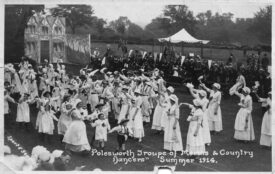
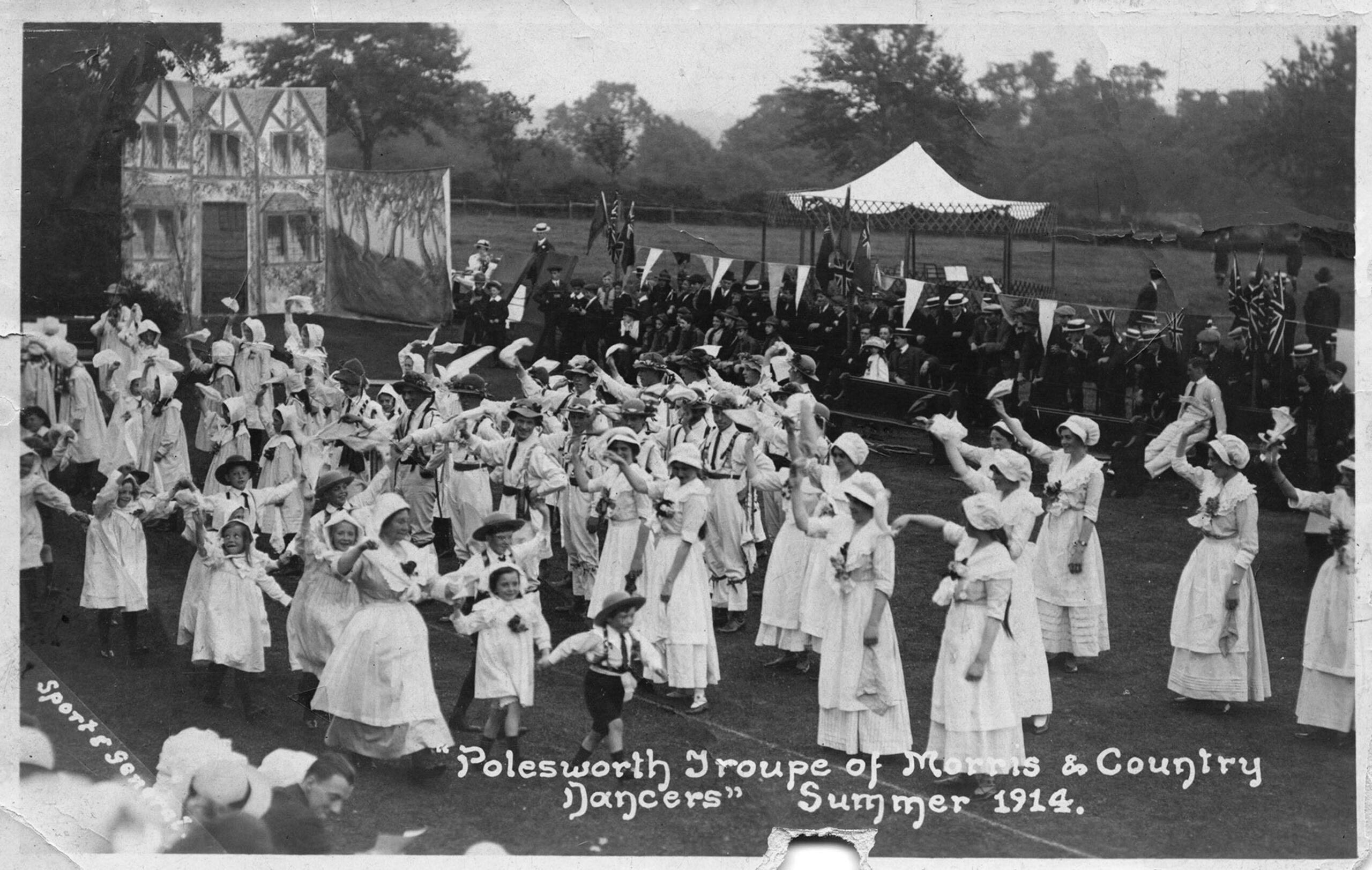
In the 1900s Mary Neal’s Espérance Club had set about teaching Morris to adults and children all over England, and in 1909 was claiming to have taught in over 300 locations. Neal’s teachers and dancers were initially all women, often instructing teachers in schools so they could teach the children. In February 1909 a team drawn from the club performed and taught in Coventry, giving rise to “Old English May Day Revels” in Stevens Memorial Hall that May. In Nuneaton in May 1909 Florrie Warren of the Club taught schoolteachers Morris, and in Polesworth in 1910 a very active Troupe came into being, taught by Warren, with women, men and children dancing and singing. These groups were not unique.
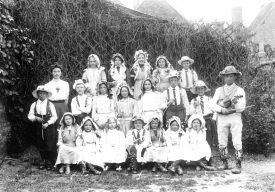
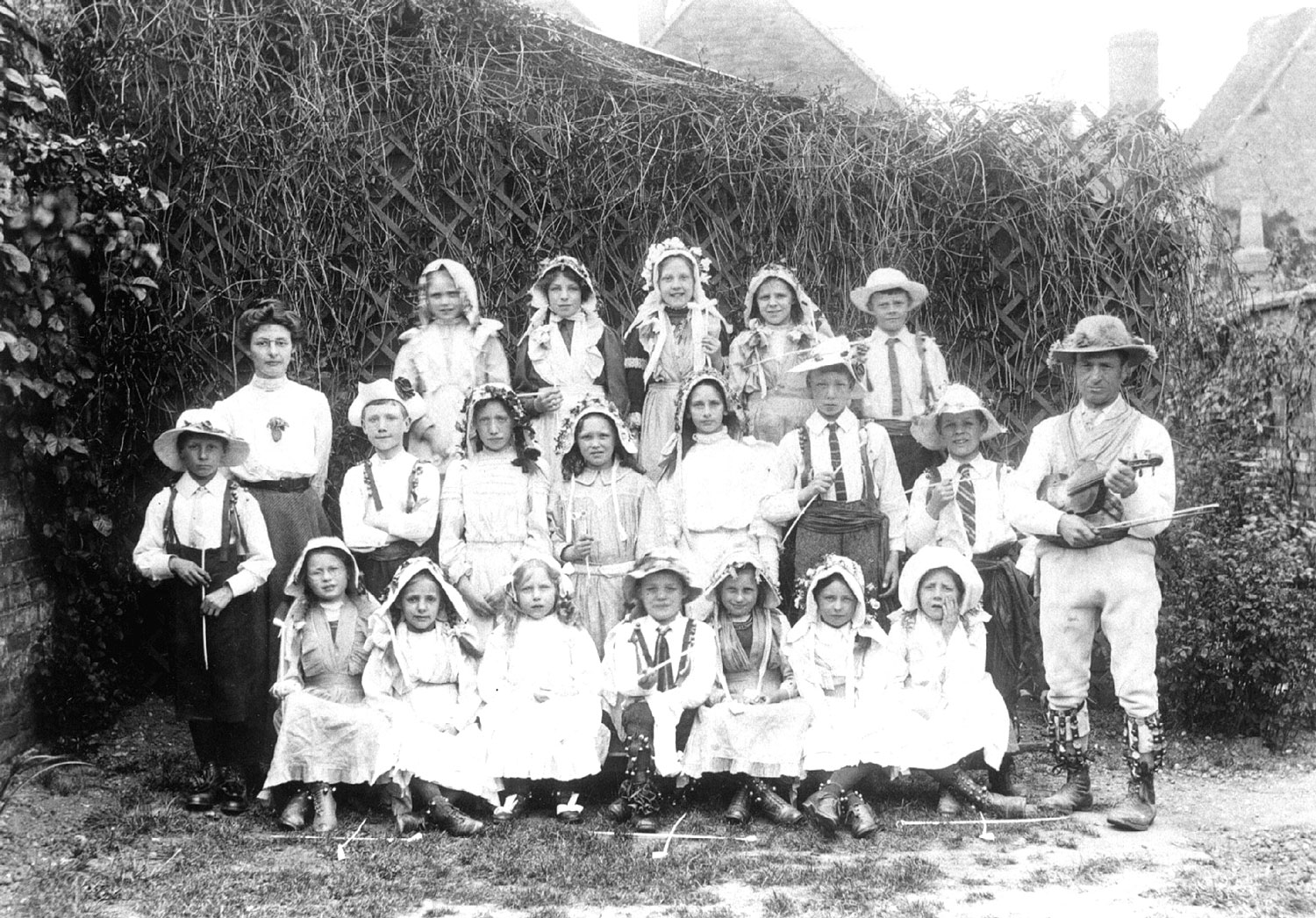
Neal was involved in organising Morris at the Shakespeare Birthday Festivities in Stratford-upon-Avon, where school Morris teams competed, and we know her teachers were in Barford in 1910; a photograph in Warwickshire County Record Office of May Day Revels in Barford in 1912 shows schoolchildren equipped to perform a Morris jig, presumably a legacy of that visit. World War One put an end to the Espérance Club’s activities, and Sharp’s influence became paramount.
Teaching and certification
The English Folk Dance Society under Sharp’s guidance established a regime of teaching and certification for Morris; many of those who qualified were women, and several men’s teams originated in their teaching. The EFDS, later the EFDSS, had local groups in which men and women danced Morris and Sword dances and held social dances, and the organisation also arranged gatherings, including an annual event in the Albert Hall.
When Morris enjoyed a huge revival during the late 1960s onwards, dozens of new teams started up, and as more women took up Morris inevitably conflict arose, with serious intolerance from some men and justifiable resentment from women, with occasional unpleasant confrontations.
Things coming to a head
At Sidmouth Folk Festival In the mid 1970s things came to a head, when a ‘fundamentalist’ Morris man refused to teach women. A more enlightened man circumvented this, but it prompted a number of established women’s teams to get together and found the Women’s Morris Federation, which did not accept men. A few years later, after heated debate, membership was extended to teams of men and of men and women dancing together, and consequently the Morris Federation gathered in many of the newer teams.
In spite of extensive 20th Century research making clear that women had danced Morris for centuries, some men still refused to accept this, and opposition continued until finally, in the 21st Century, the Morris Ring opened membership firstly to teams with women musicians, “discovering” that members had had these for years, and then to teams including women dancers. Residual animosity survives on both sides, but the world of Morris has changed.





Comments
Add a comment about this page