
Mary Anning in Warwick? Well, kind of, and here’s the story. Lyme Regis fossil collector Mary Anning (1799-1847) has emerged as one of our most influential palaeontologists – having brought amazing discoveries of ichthyosaurs, plesiosaurs and other Jurassic sea-creatures from the west Dorset coast to the attention of the scientific establishment of the day. Though she didn’t achieve the recognition that she deserved in her own lifetime, she was well respected as a skilled collector and had friends in high places.
Lyme Regis rock beds across the county
Here in Warwickshire, a strong Lyme Regis connection wasn’t lost on the palaeontologically-minded membership of the Warwickshire Natural History and Archaeological Society in the 1830s and 1840s. Through an ‘accident’ of ancient tectonic forces and erosion, Mary Anning’s Lyme Regis rock beds run through the county from Shipston to Rugby, affording Warwickshire’s Victorian geologists opportunities to collect their own examples of Mary’s sea-dragons from the local quarries. As a result, nearly 200 years on, the Warwickshire Museum boasts a fine collection of fossil ichthyosaurs and plesiosaurs, not just from Warwickshire but also further afield – Somerset and even Lyme Regis.
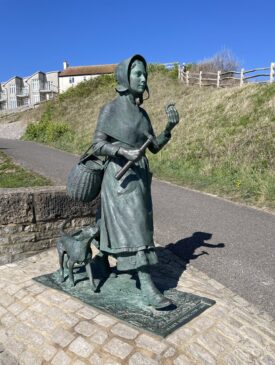
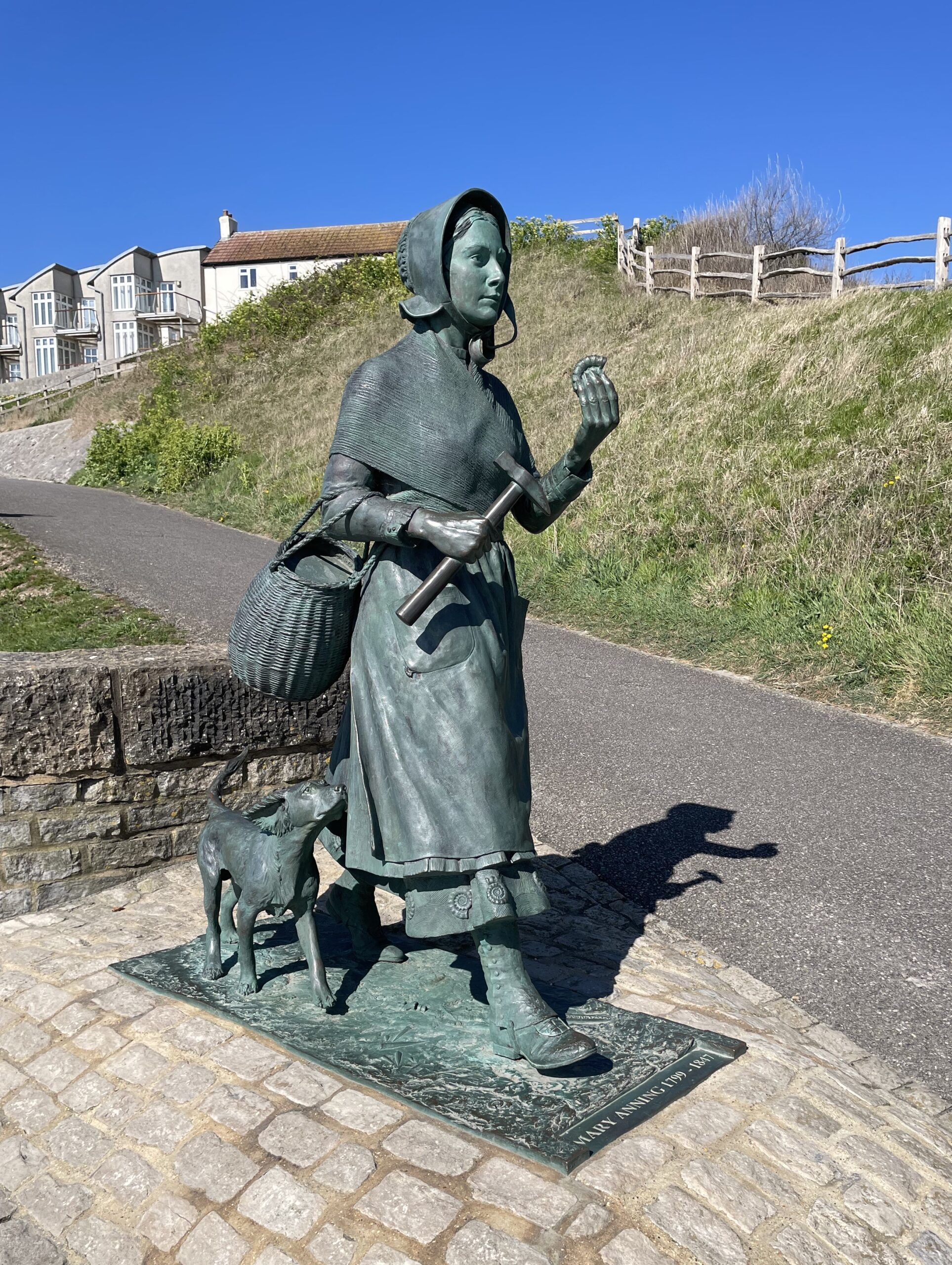
Fast-forward to 2018, and the Mary Anning Rocks campaign. This was initiated by a Dorset schoolgirl, resulting in a crowdfunding campaign to commission a statue in Lyme Regis to celebrate Mary Anning’s life and place in the history of science. Sculptor Denise Dutton was given the task of creating the Mary Anning statue, originally revealed to the public in 2021 as a clay maquette – a scale model of the proposed final work. The statue was revealed a year later, at the east end of the town, overlooking Mary’s favourite fossil site – the Black Ven landslip. Since then, the statue has gained much attention, attracting visitors from all over the world.
Not the end of the story
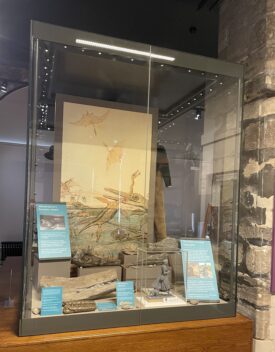
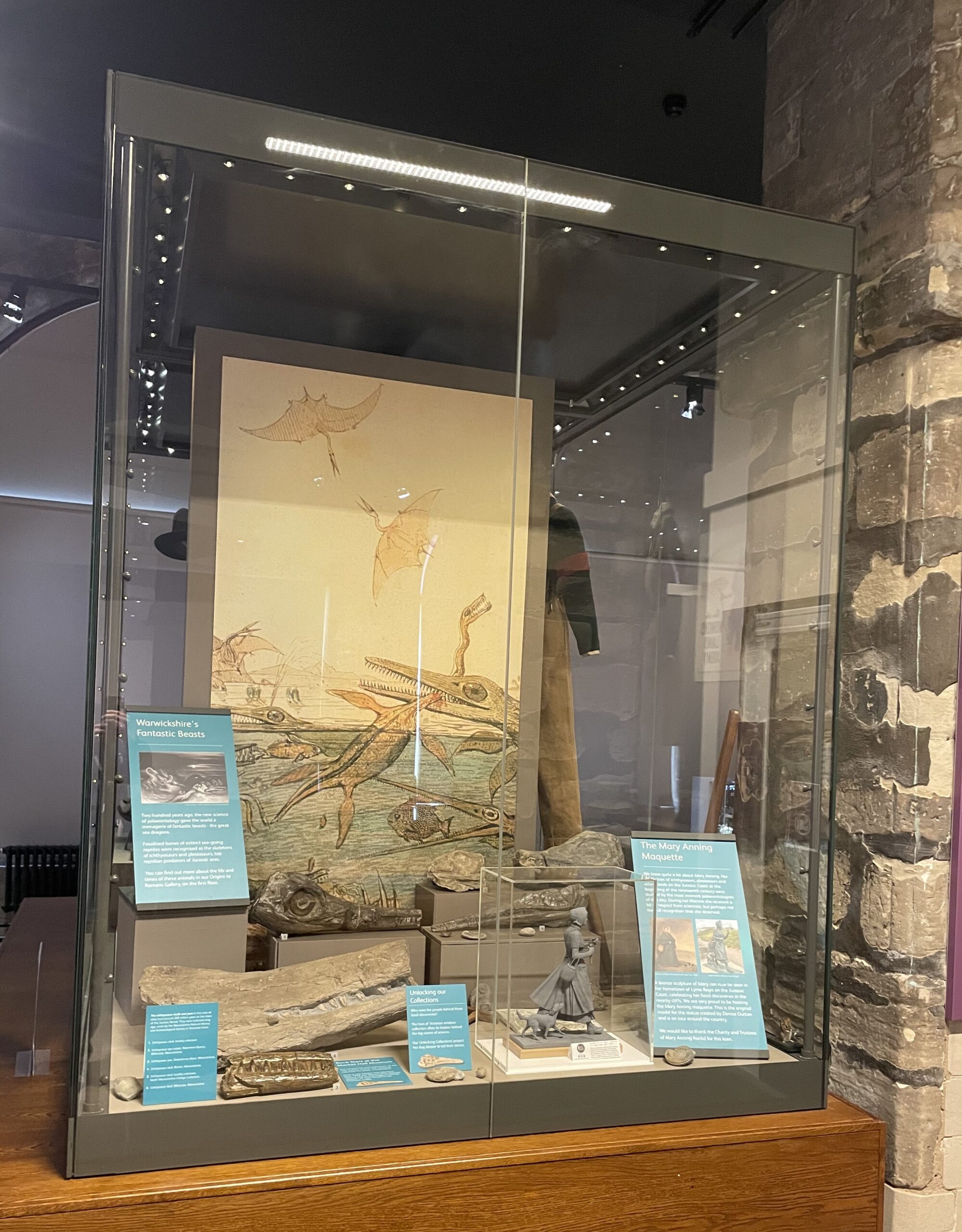
This wasn’t the end of the story. In 2022, ‘mini-Mary’, the maquette, embarked on a tour of British museums and heritage centres, big and small. We received Mary at the Market Hall Museum in late March 2025, where she will stay until July. From here, her journey will continue to the Somerset Earth Science Centre near Radstock. Here at the Market Hall, she features in a case surrounded by locally collected ichthyosaur skulls and Victorian fossil collecting paraphernalia, against a backdrop of ‘Duria Antiquior’, an 1830 watercolour depicting Jurassic Dorset, based on Mary’s fossils. I did my best to make her and her canine companion Tray feel at home at the Market Hall Museum, and I hope that you agree.
References
https://geologistsassociation.org.uk/maryanning/





Comments
Add a comment about this page