
George Greville had shown himself to be occupied with Napoleon and the consequences of battle and his favourite son, Charles John Greville (1780-1836), had by the far the most active role to play in the theatre of war. His beginnings as a British Officer in India had been called short as he was to join an expedition in 1800 to expel Napoleon and his legions from Egypt, which they had just conquered. His own memoirs of the trip, found in the Warwick Castle archive at the County Record Office, recount his and the army’s frustrations. After marching through the scorching desserts and crossing the Red Sea towards Cairo, the cowardly Bonaparte had already left.
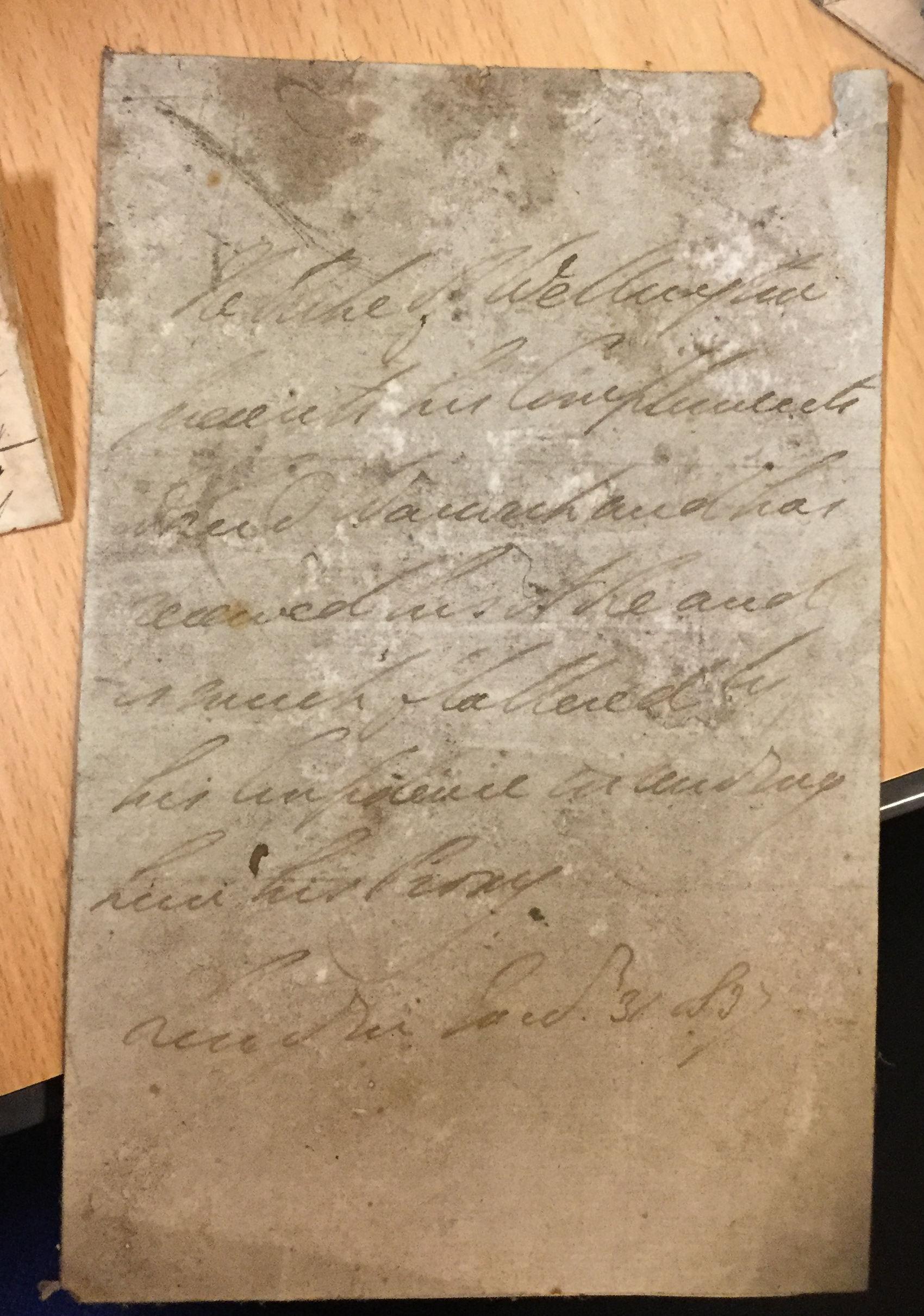
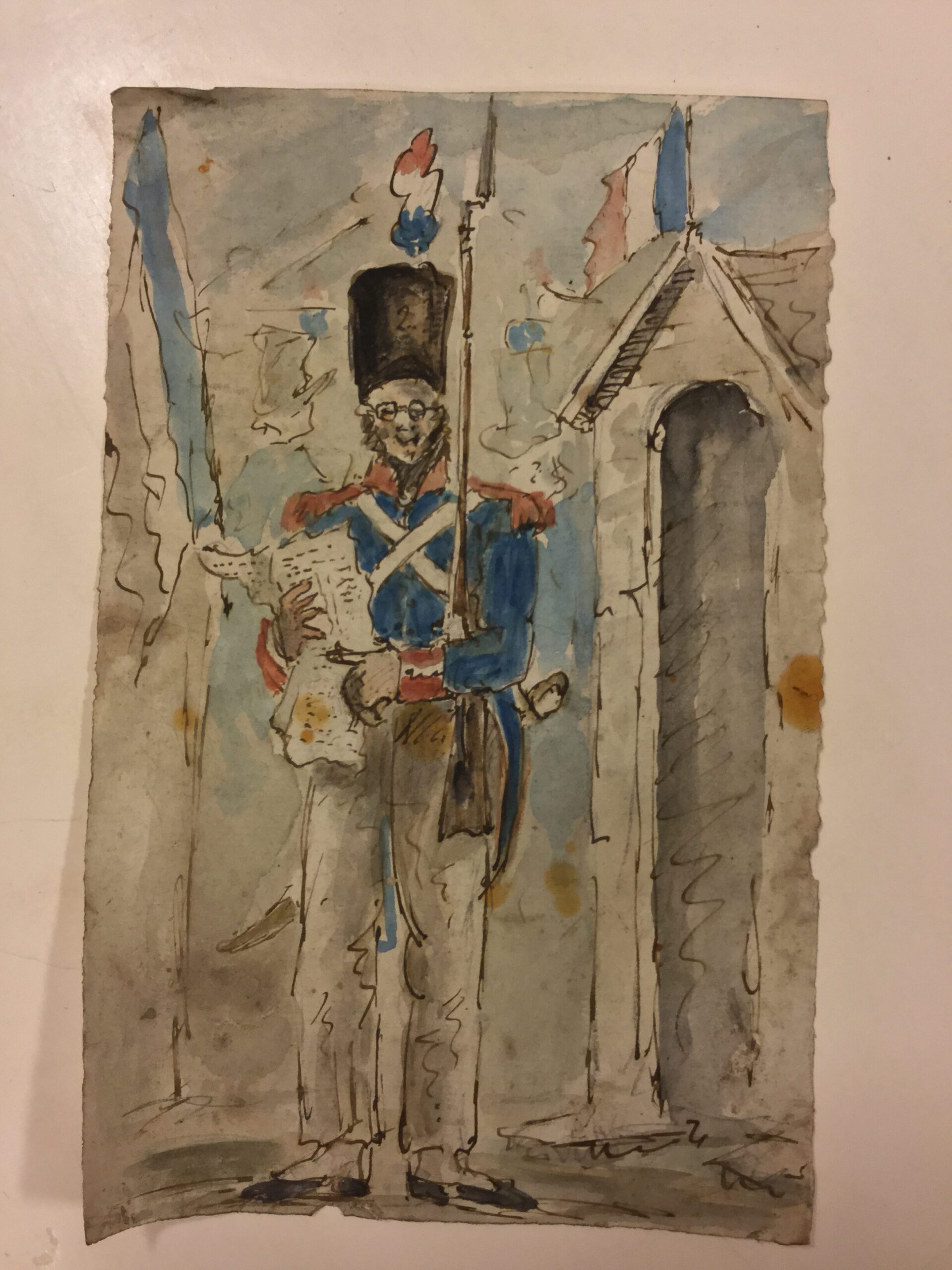
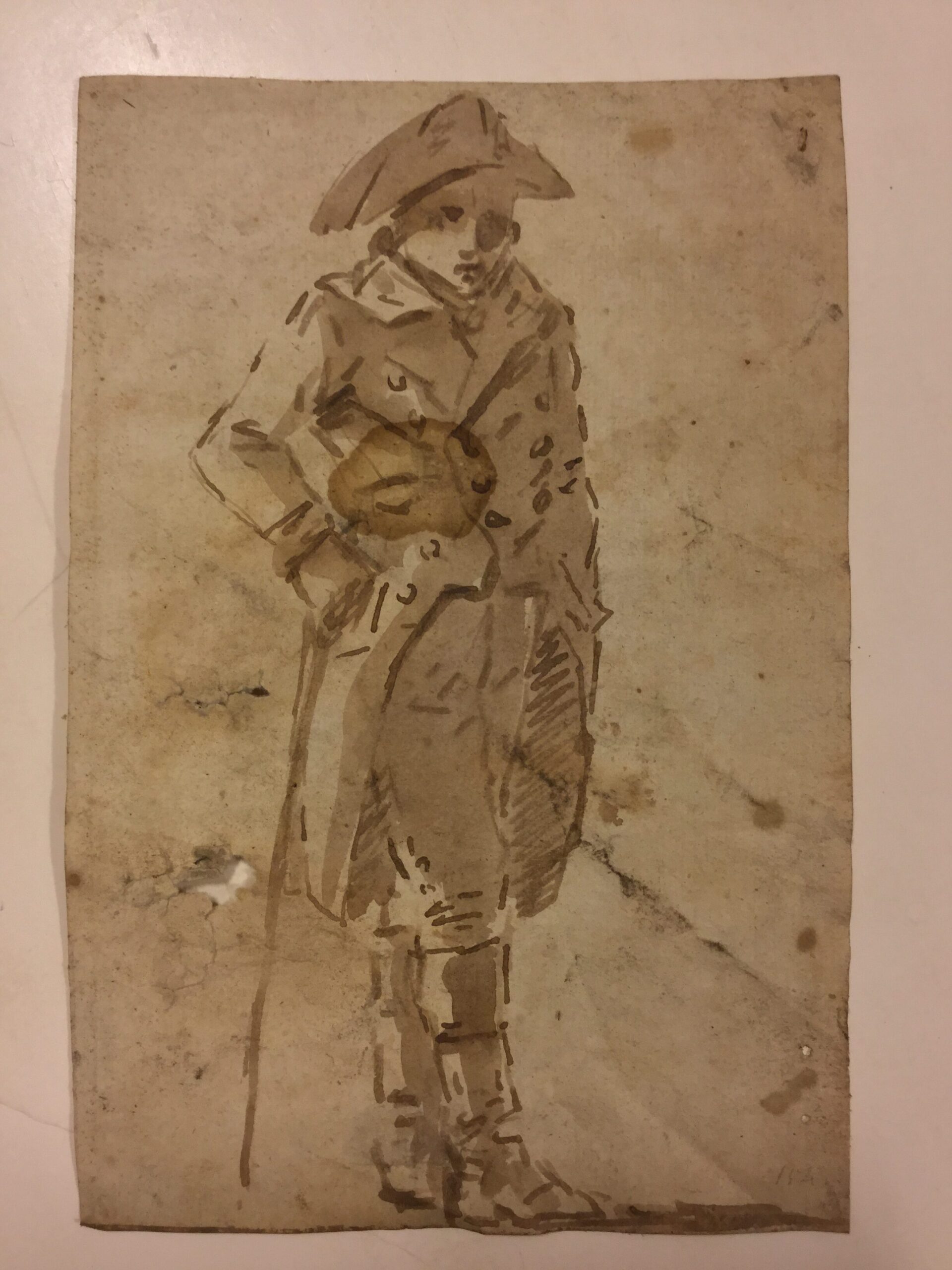
This was only the beginning of a marvellous career for Charles. He was one of the 10,000 strong force which landed in Portugal in July 1808 under the command of Sir Arthur Wellesley, later created Duke of Wellington. He was present at several key engagements, including the Battle of Vitoria where a horse was shot under him. A much later congratulatory note to Charles, signed by the Iron Duke, survives in the Warwick Castle papers. Evidence of Charles’ talents as an artist are also scattered across the boxes of the archive, including drawings he made of various comrades, soldiers and officers throughout his time in Spain. Hauntingly, one swiftly executed ink drawing, showing a man in a very evocative bicorne, bears as a remarkable fleeting resemblance to France’s dictator, Napoleon Bonaparte.
Association with the key players
By 1815, and after a remarkably late arrival from the Prussians at Waterloo, Napoleon had been defeated once and for all. The Greville boys had actually met all of the key players who had a hand in his vanquishing. Charles had been in the service of Wellington in Spain and Portugal. Henry had met Emperor Frederick Willhelm III in Berlin (and danced with the Empress at a ball), had attended Emperor Alexander I’s coronation in Moscow (before the Russians burnt the city to the ground) and had been presented to Francis I, Emperor of Austria, in Vienna in 1802. This is not to mention the introductory letter he mentions to have personally received from Lord Horatio Nelson himself before his visit to Copenhagen in 1801. Documents from the Warwick Castle Archive record all of these encounters and demonstrates the impressions and feelings of these Warwickshire men during this period of war and upheaval.
A painted portrait
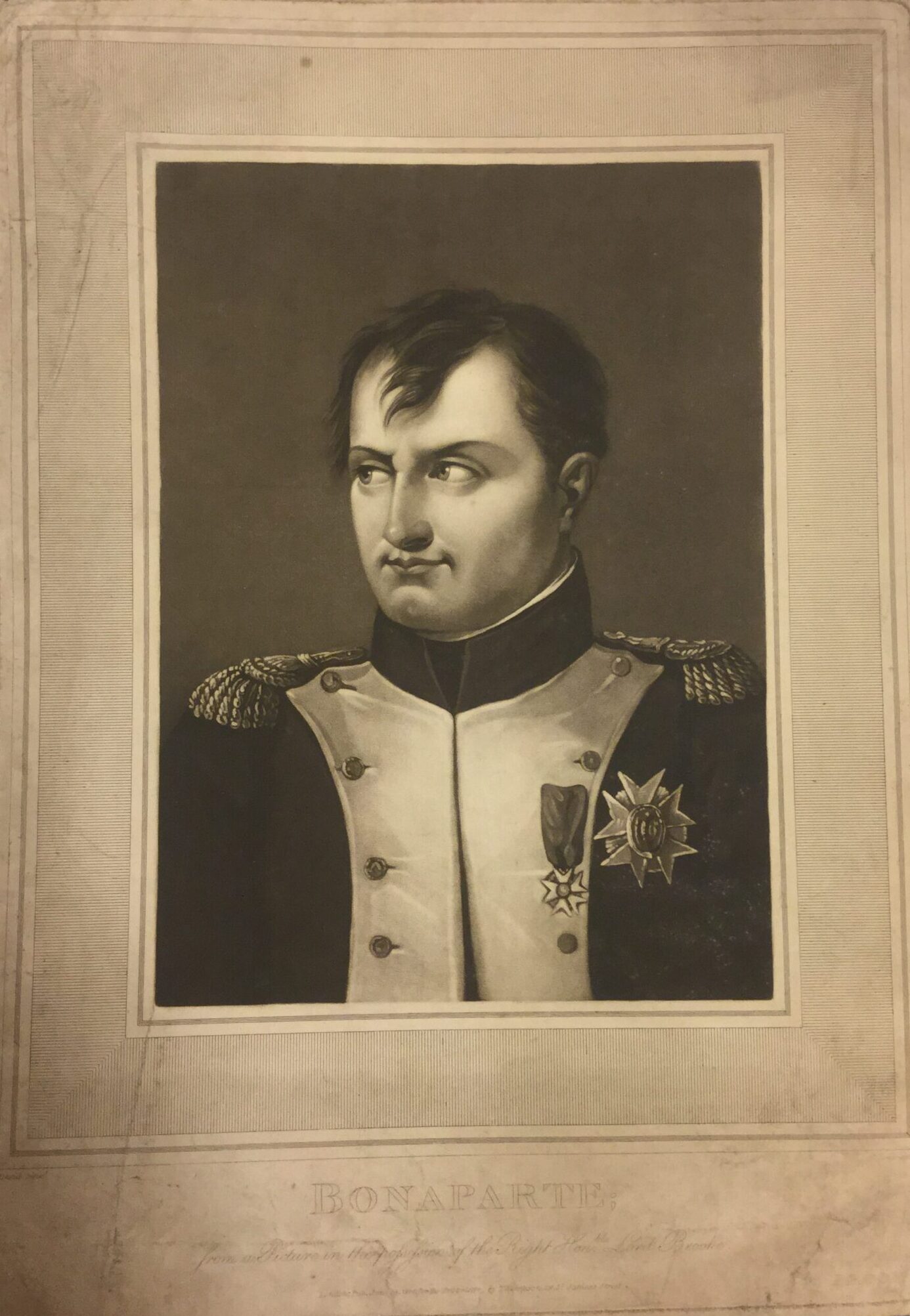
By 1853, but undoubtedly acquired much earlier, a written inventory shows that the walls of Warwick Castle contained a painted portrait of Napoleon Bonaparte. This work of art, which hung in the Compass Room just off the State Apartments corridor, is now lost. Luckily for us, the Greville family papers contains an engraving of it. Although just a mere bust-length copy of Jacques-Louis David’s 1812 portrait, it is a chilling reminder of the singular figure to change the history of Europe forever.
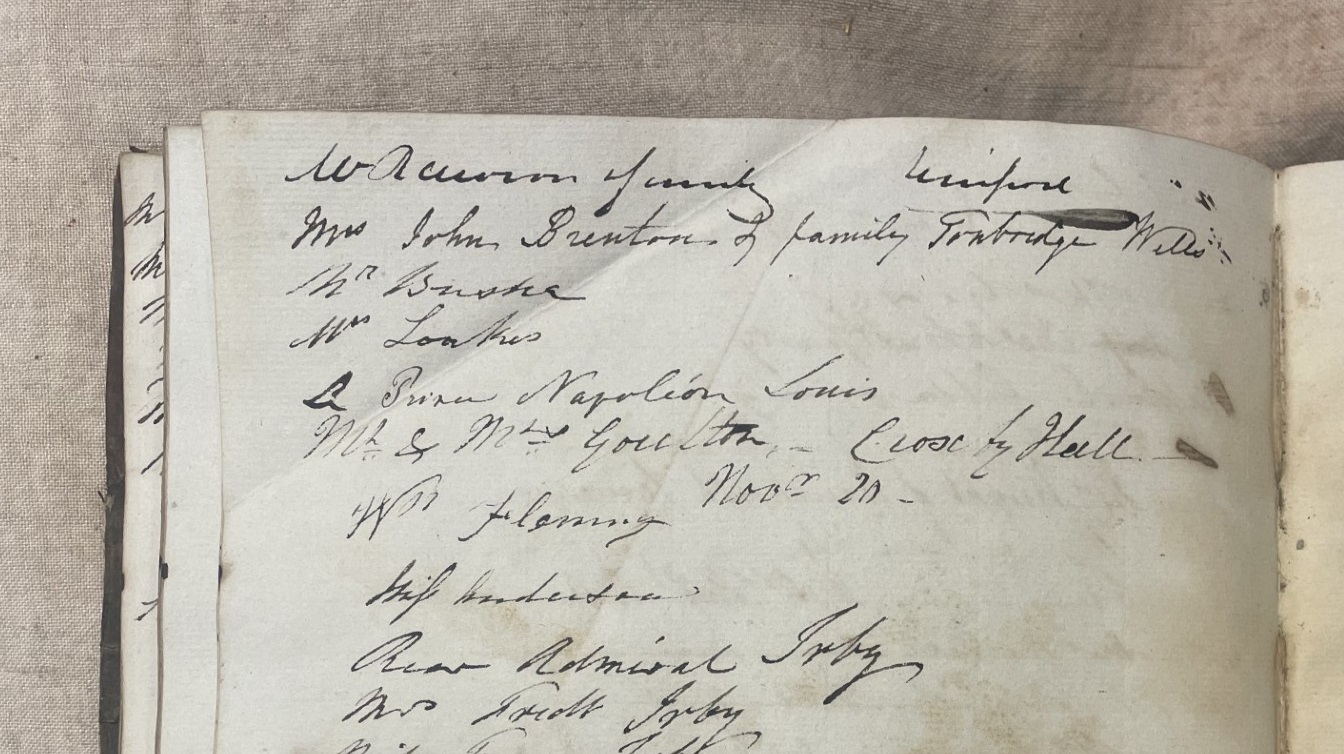
Although Napoleon was defeated, his memory in Warwick and Britain persisted. By 1838, a mere 23 years after 50,000 men lost their lives at Waterloo, Warwick Castle was to play host to a Bonaparte. The castle’s visitors book of 1838 contains the personal signature of Prince Napoléon Louis, the nephew of Napoleon I who would later become Emperor Napoleon III. After spending a period of exile in England, where he resided for a considerable time in neighbouring Leamington Spa in 1839-9, this forgotten signature is all that remains of what must have been a remarkable visit. A mere few decades later, Napoleon III’s France would become Britain’s ally in attempting to halt Russia’s ambitions against a declining Turkey. George Greville (1818-1893), 4th Earl of Warwick, would serve as Colonel Commandant of the Warwickshire Yeomanry during the Crimean Wars. It is remarkable to imagine how this sharp reversal of allegiances might have played on the Earl’s mind.
The last Earl of Warwick to enter a battlefield
It was Leopold Guy Francis Maynard Greville (1882-1928), the last Earl of Warwick to enter a battlefield, who presided over the ending of the long 19th century. Having made his career in the military, Guy Leopold is recorded to have toured several Napoleonic battlefields with Sir John French in the opening years of the 20th century. In some respects, the latest conflict, World War One, had partly achieved what Napoleon had started. By 1918 only Britain remained standing, with the Empires of Germany (Prussia), Austria and Russia being defeated and in part dismantled altogether. For this adventuring Earl of Warwick, who still admired the historic and chivalric role of the calvary in battle, his participation in the war, and the dreadful aftereffects, would hasten his demise dramatically.





Comments
Add a comment about this page