
Joan Cockram may have been born in Tamworth, but her life and career saw her crossing the border to Warwickshire. Indeed, her own family history was closely tied up with Pooley Hall Colliery. One of her early memories was when she was eight years old, and she went to a big funeral in the town for a miner called Martin Morris , the coalface had fallen on him at Pooley.
She remembered a young boy Ray, who was Martin’s son, being there. Little did she know that 20 years later they would be married and have three children.
Early life
Her early life was very much tied up with the second world war. After school she did fire watch duties at her school and church with her dad and godfather, although she was allowed to sleep most of the time. At 14 she left school and became a seamstress making service personnel uniforms, but when she got to 18 she wanted to enrol for the war effort. Initially she wanted to join the Land Army girls but they were full, so she went to be a nurse at Tamworth General – this was a hospital for miners and would see her path crossing over the border to Warwickshire once again.
Pooley Hall visit
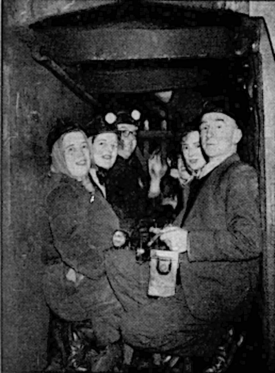
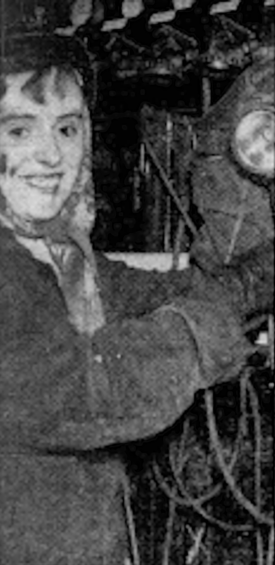
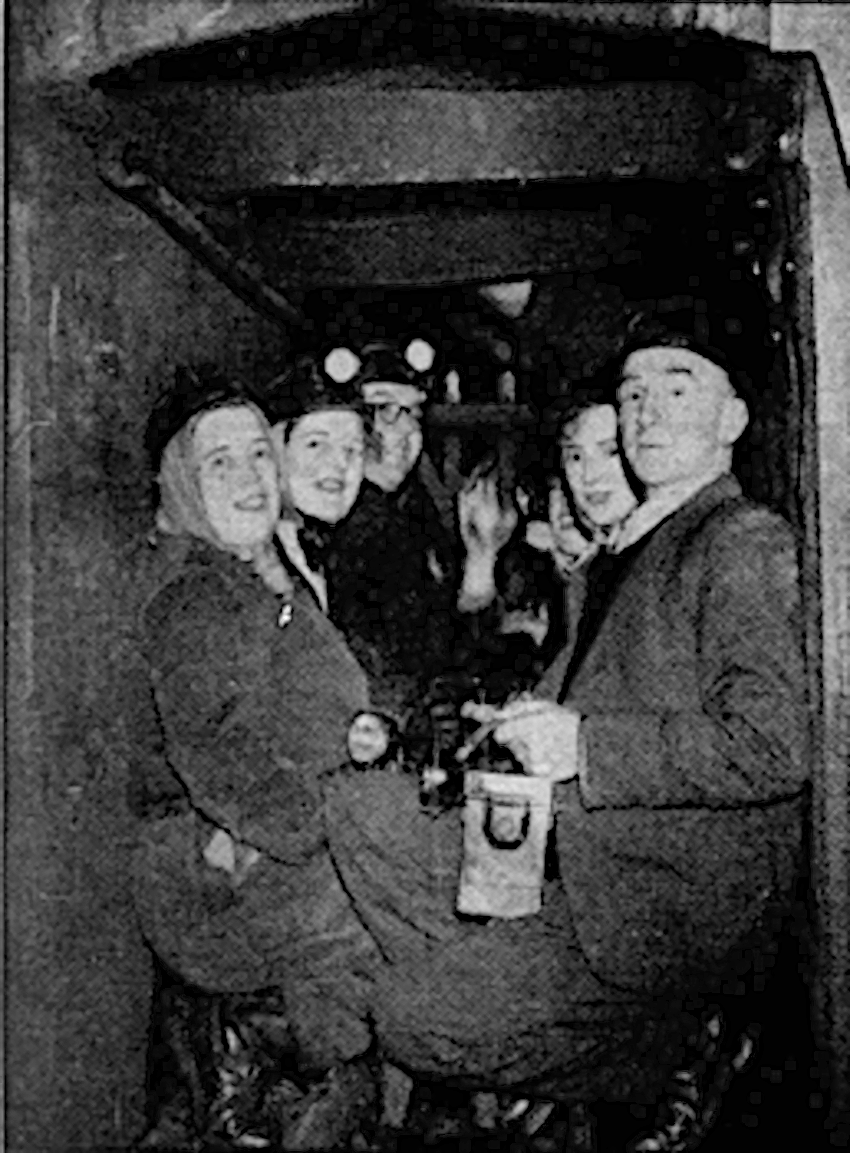
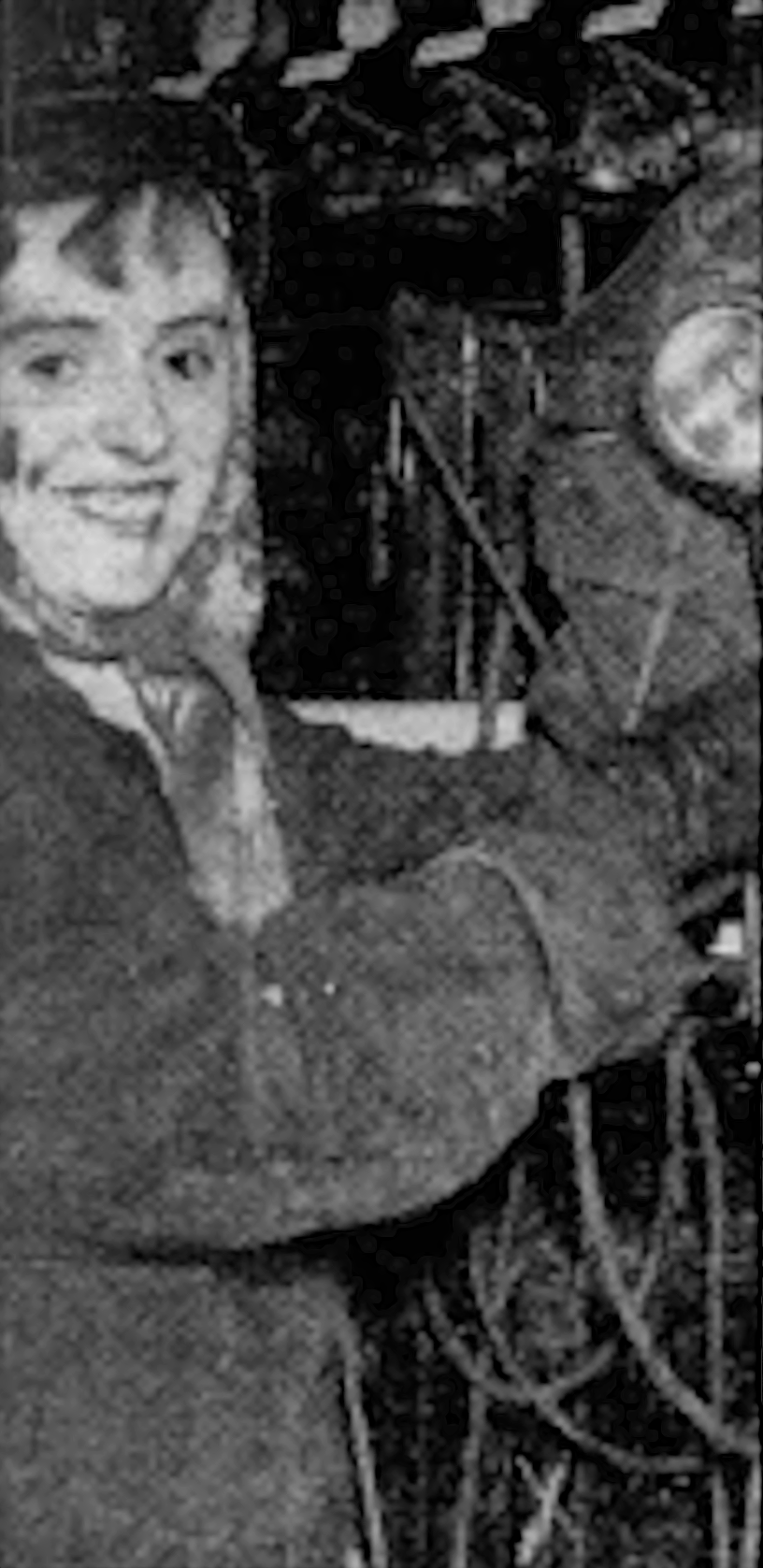
Returning to Tamworth Hospital after doing her training at Selly Oak, when she was 26 she had reached the position of Sister and was one of a group of eleven doctors and nurses to go down the pit at Pooley Hall. Most of their patients at the hospital were miners, so the expedition was made with the objective of learning about their patients’ backgrounds, so that they might better learn how to treat them and understand what the miners were talking about when admitted.
The trip was not glamorous – “once is enough”1 said the matron Miss IM Aston about the experience of going down a mine – but they hoped that later they would be able to return and take some assistant nurses down. Doctor H Goodliffe mentioned that he thought it “an extremely valuable experience. It is most important and helpful to know the conditions under which the men work.”2 Showing the defined gender splits at the time, the matron commented how “the doctors will be able to have a bath at the pithead, but I don’t know about my nurses – I suppose they’ll have to wait till they get back.”3
Later career
Her career continued at Tamworth General until she had children, but returned to work after meeting the Matron and being asked to return during a flu epidemic. She duly responded and worked nights in order to look after her small family, which comprised of three children under five at this point. The rest is history, and as her career continued she eventually became Matron
References
1 Birmingham Gazette January 19th 1952, page 3
2 Birmingham Evening Despatch, January 19th 1952, page 1
3 Birmingham Gazette January 19th 1952, page 3





Comments
Add a comment about this page