
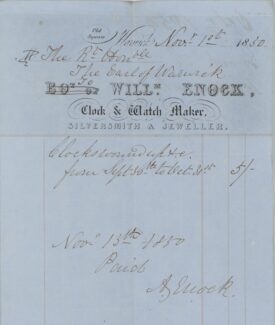
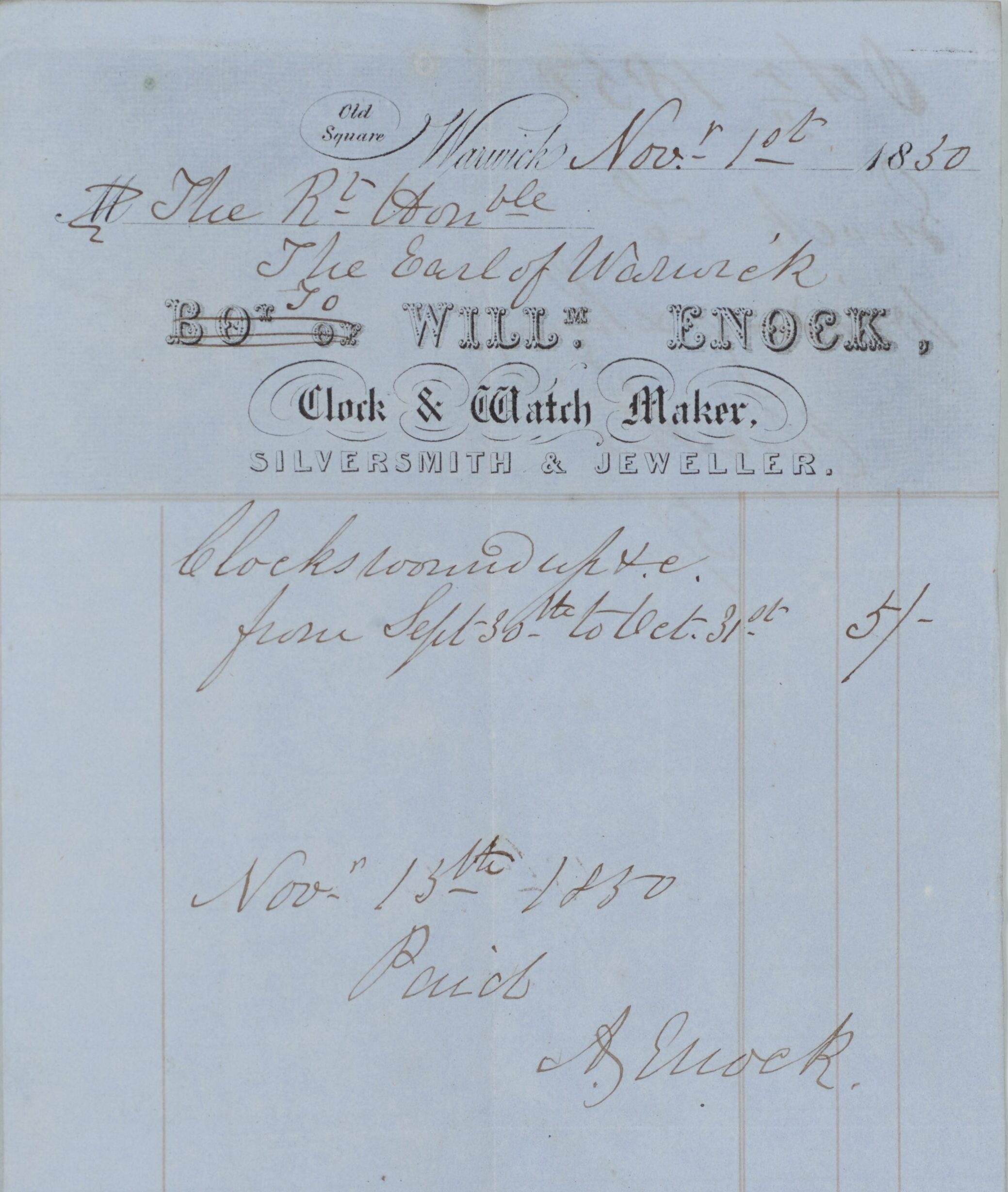
William and Henry Enoch were brothers who both had businesses in Warwick as watchmakers and jewellers in the early Victorian period. William was the younger brother and had a shop on Old Square. Henry’s shop was on Smith Street. One newspaper advert states that William was selling musical clocks, watches and carried out repairs. Warwickshire Museum has long case clocks made by both William and Henry in its collections.
Employed to wind the clocks
Little is recorded about Henry’s life, but records tell us his son didn’t continue the business when he died, instead becoming a carpenter. Records and newspapers tell us more about William’s life than Henry’s. We know William was employed to wind the clocks at Warwick Castle. Perhaps he wound the clock rumoured to have belonged to Marie Antoinette.
When the railway came to Warwick, William was on a committee of male business owners who had a say in if the town wanted the railway at all. The committee was put together to make the best decision for the prosperity of the town. Committees like these were formed across the country as the railway network grew. They had to decide whether Warwick became part of an extension of the London and Birmingham Railway. After initially saying no, the committee agreed and welcomed the railway to Warwick.
Wife continued business
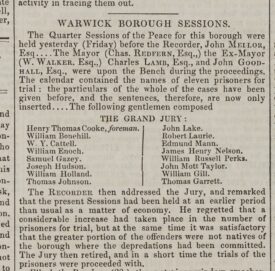
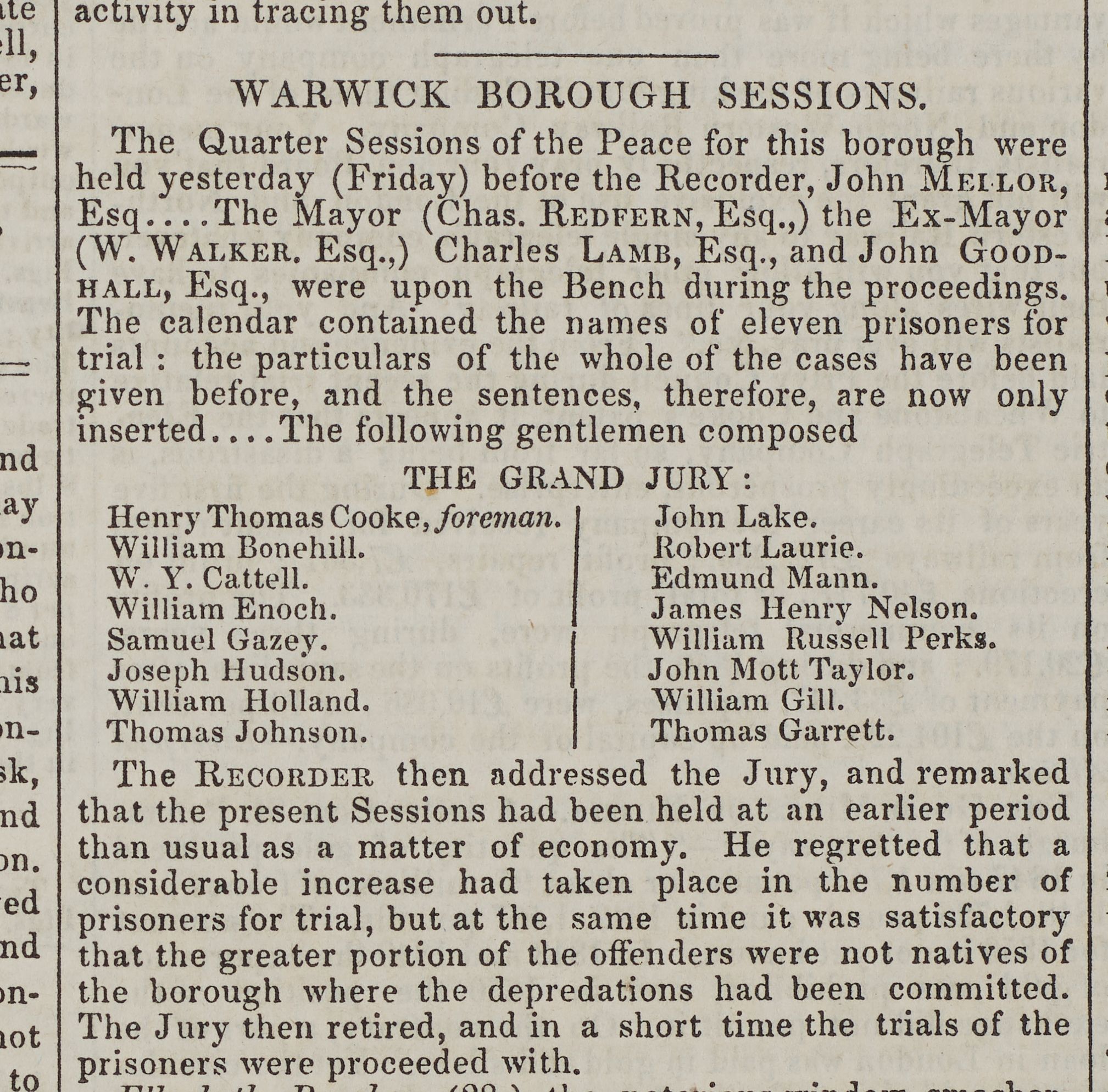
William was also called to serve on a Grand Jury for Warwick’s Quarter Sessions in Old Shire Hall. The Quarter Sessions were held four times a year and tried cases like theft, fraud and assault. The Grand Jury was made up of 12 men who were landowners or business owners. Their job was to decide if there was enough evidence to prosecute a case. If they decided there was enough, then the case would go before the judge and a Petty Jury who decided on guilt or innocence.
When William died in 1855, his wife Sarah continued running the business in Old Square. The 1861 census lists Sarah as head of the household, occupation jeweller and silversmith. The business eventually passed to her son, also called William, a watchmaker and jeweller. He was probably trained in the profession by his parents.
This article is part of the Through the Shop Window trail showcasing the links between Warwick businesses and Warwick Castle in the 1800s. Supported by The Friends of Warwickshire County Record Office, The Steven Wallsgrove Legacy and Warwick Town Council.





Comments
Add a comment about this page