
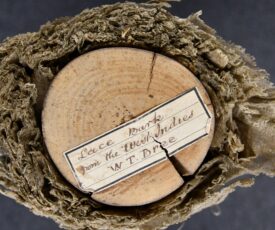
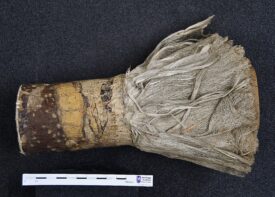
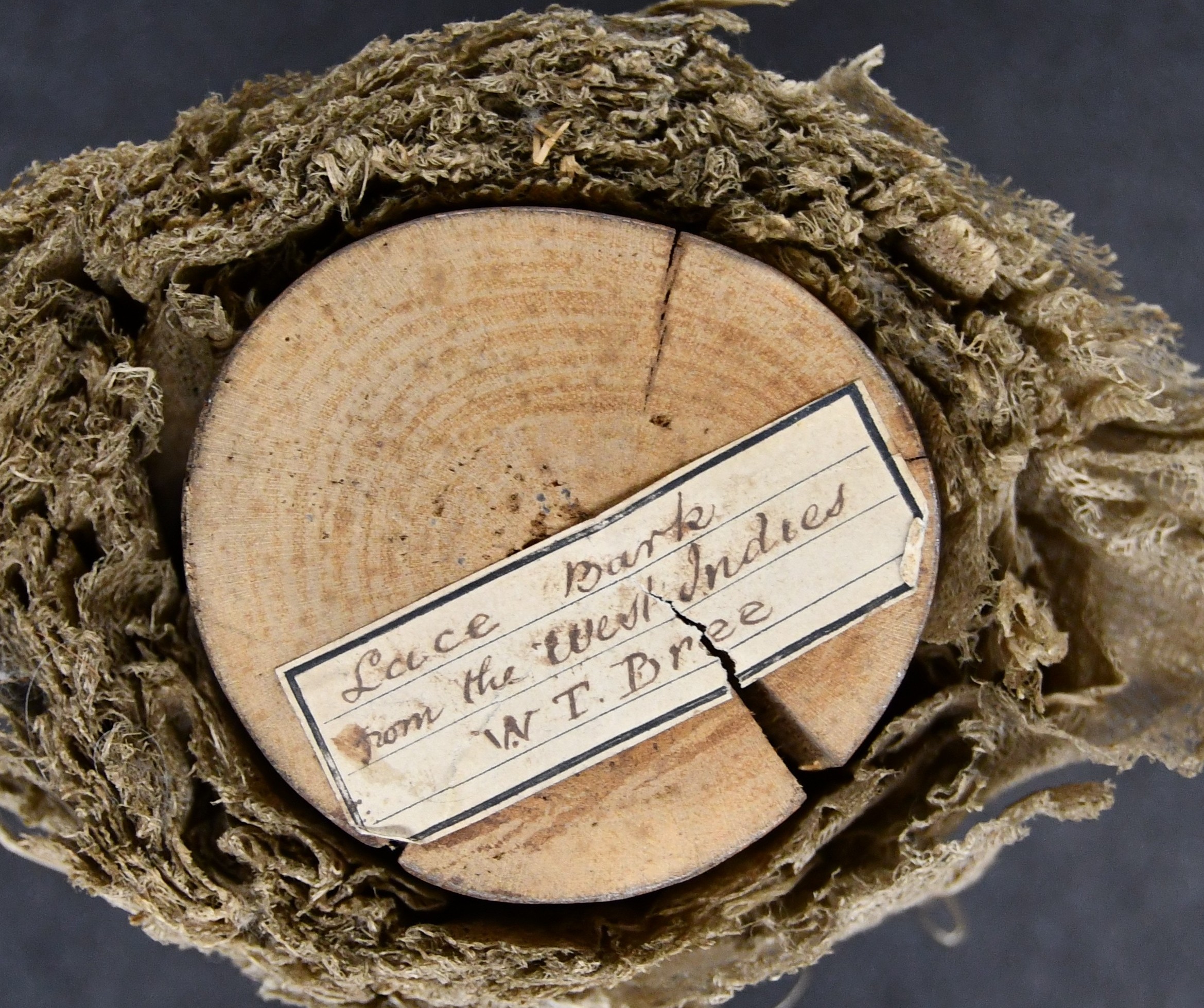
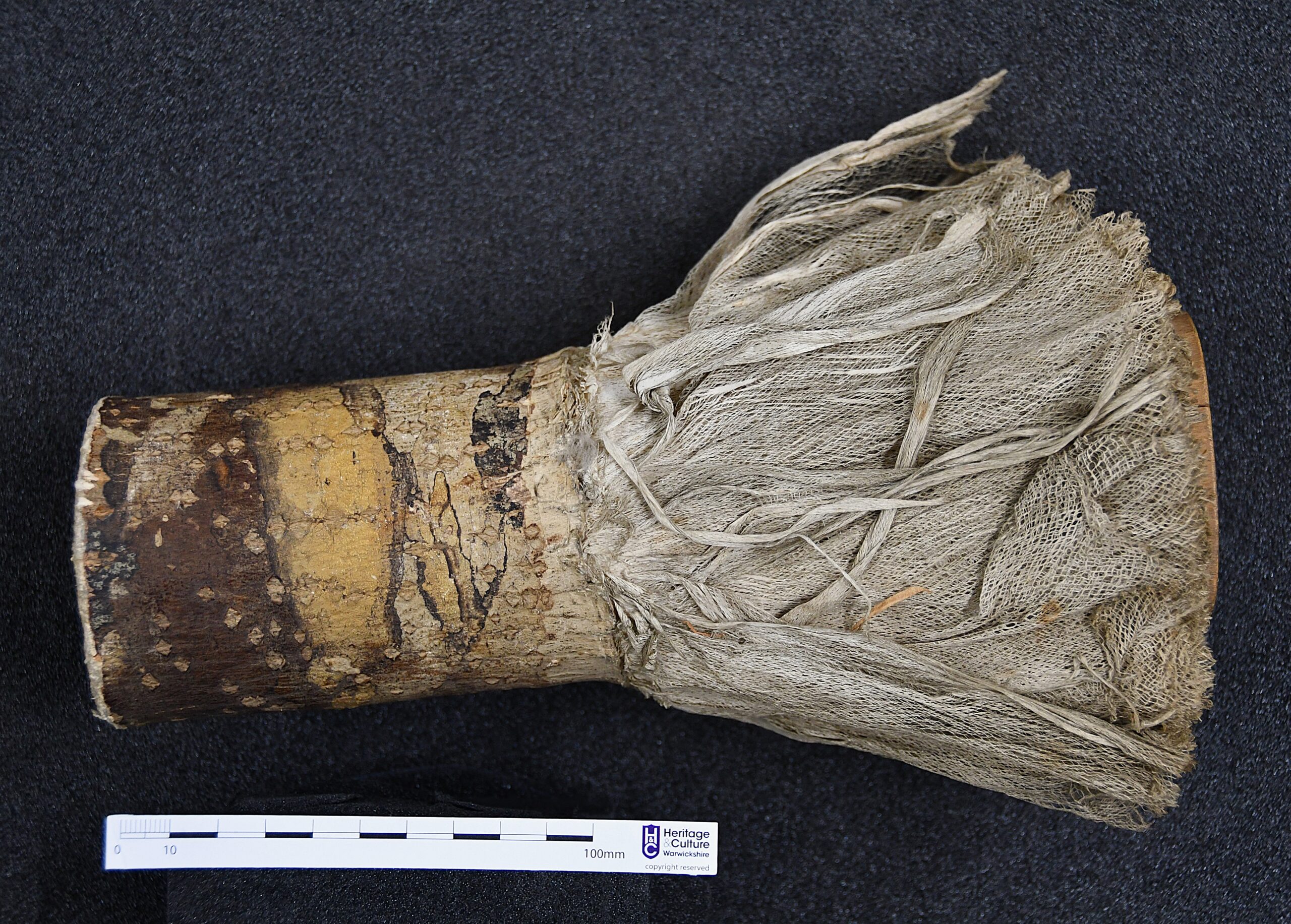
Warwickshire Museum Service has a small ethnographic collection, much of which came to us through the Warwickshire Natural History and Archaeological Society during the 19th century. This object has been identified as ‘lacebark from the West Indies’, according to an old label which is still attached. We know it was donated by Reverend William Thomas Bree, and by looking through the annual reports published by the Society, we have traced this donation to 1858.
How it was acquired by Bree, we do not know. It is unlikely that Bree carried out the fieldwork himself and would have probably relied on others to do this for him. Objects were sometimes acquired in ways we would see as unethical today. We hope that in the future more research will reveal how this object was collected and why.
I decided to delve deeper to understand the origins and uses of lacebark.
The lacebark tree (Lagetta lagetto) is native to parts of South America and the Caribbean. The tree grows in soil-less crevices. A significant part of the limestone forest in the western part of Jamacia lies within Cockpit Country, 1300 square kilometres occupied by the Leeward Maroons — an African-Jamaican community who were formally enslaved (Brennan et al, 2013).
Variety of items
A variety of different items were made from lacebark. Items such as cordage and whips (these may have used on people as well as animals), as well as textiles were made from the bark. Textiles were a popular choice because the inner bark could easily be separated into thin layers and stretched to at least five times its original width. Most bark cloths are prepared by soaking and beating bark strips until they are smooth and supple which is a difficult process. Lacebark, on the other hand is easier to manipulate. It is produced by peeling away the bark and extracting the inner netting. The material is soaked until it’s soft and carefully stretched by hand. This is probably why it was commonly used to make clothes.
Slavery and clothing
Slave owners in Jamaica were required by law to provide enslaved people and their descendants with sufficient clothes but they received the minimum amount of clothing. This meant that many people had to regularly supplement their yearly rations by turning to other alternatives, including lacebark (Buckridge, 2003).
From the 1890s there was a decline in lace-bark tree populations, probably brought on by mass tourism to Jamacia and the development of the large-scale souvenir industry during the 1880s. Lacebark received wide exposure at international exhibitions, including the Great Exhibition of 1851 in London.
References
Brennan, E. Harris, L. Nesbitt, M. (2013) ‘Object Lesson Jamaican Lace-Bark: Its History and Uncertain Future’. Textile History, 44 (2), pp.235–253.
Buckridge, Steve. (2003) ‘The Role of Plant Substances in Jamaican Slave Dress’. Caribbean Quarterly. Vol. 49, No. 3, pp. 61- 73
Soth, A. (2022) Lacebark as a Symbol of Resilience.





Comments
Add a comment about this page