
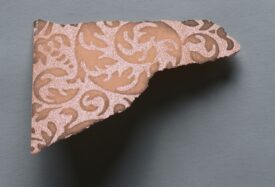
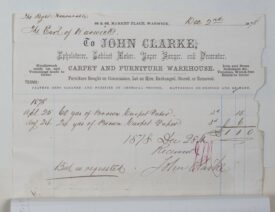
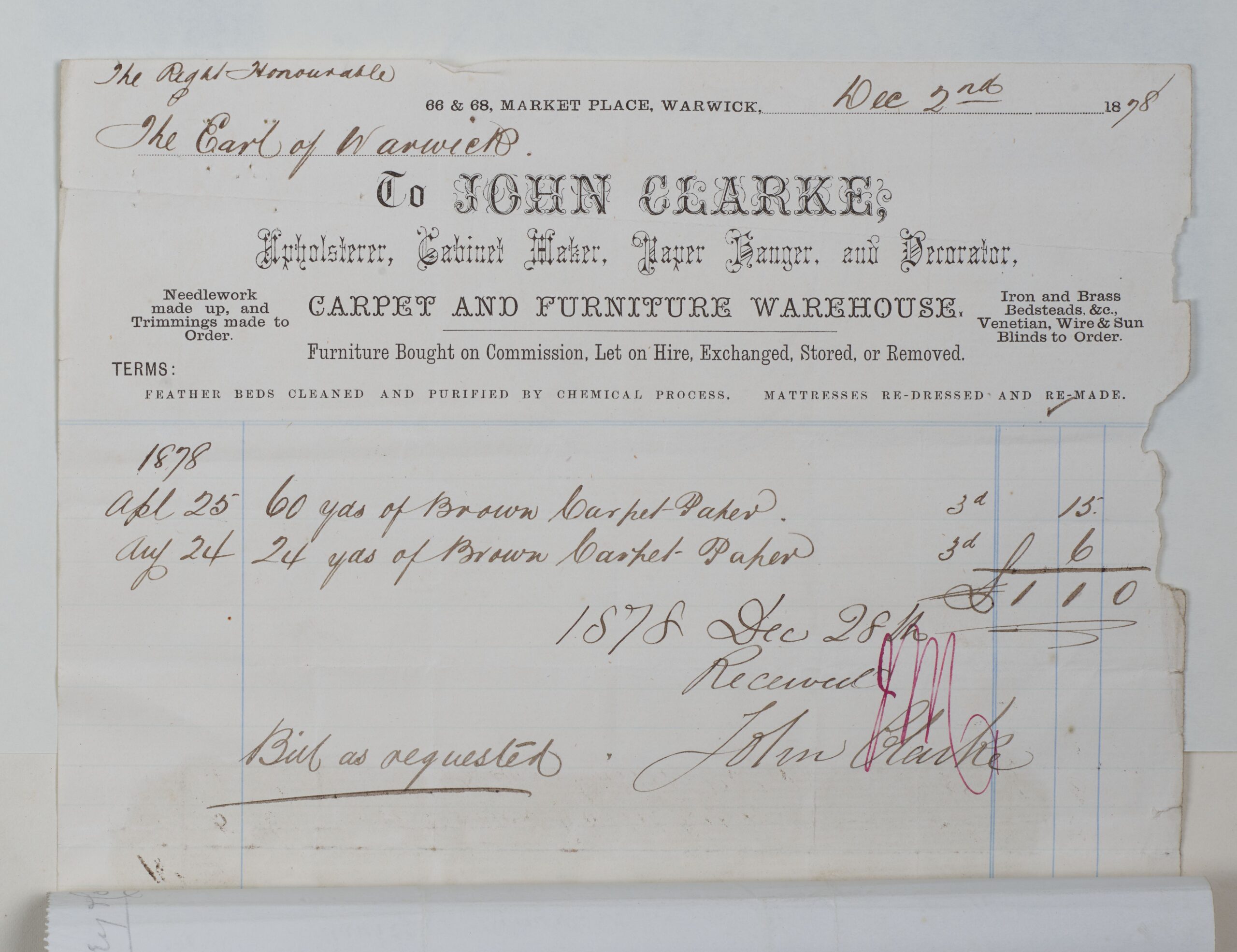
John Clarke’s business was making furniture and hanging wallpaper in the homes of Warwick and at Warwick Castle too. By the late Victorian period John was employing six men and three apprentices. Records show John and his staff decorated passages and staircases throughout Warwick Castle. They also decorated other properties owned by the Earl of Warwick.
From hand printing to mass production
Early Victorian wallpaper was made by hand printing the patterns, using large wooden blocks. By the time John Clarke was selling wallpaper, the industrial revolution meant it was being mass produced by machines. This made the cost of buying wallpaper cheaper. Wallpaper went from being a luxury item to an everyday one.
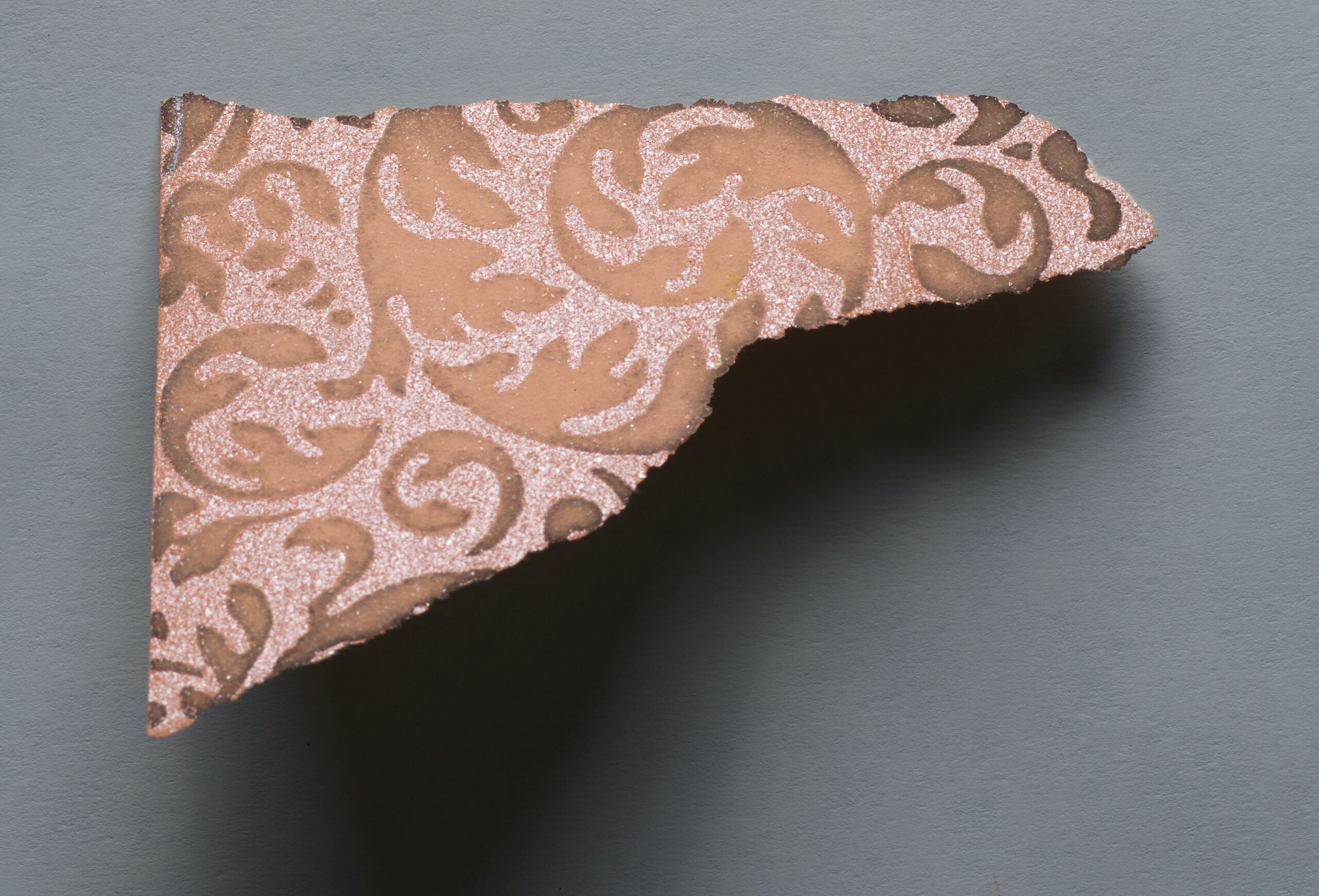
A letter from Mary of Teck to Lady Eva Greville, daughter of the Countess of Warwick, includes scraps of her new wallpaper. One of the scraps is from a pink wallpaper, which is surprisingly covered in glitter.
A chemical process
Advertisements tell us John Clarke also offered a ‘chemical process’ for cleaning and purifying feather beds. We don’t know what chemicals were used by John, but it doesn’t sound like it would have been healthy for either the cleaner or the person sleeping in the bed next.
The use of mercury was popular at the time. It was used for cleaning beds and may have been used by John Clarke. Absorbing mercury through the skin, or inhaling it, was dangerous. It could cause memory loss, tremors, insomnia and other symptoms.
Also elected to the Town Council
As well as running his business, John Clarke was elected to the Town Council. He represented the St Mary’s ward for many years. He died at home on 10th July, 1888, and is buried in Warwick Cemetery.
This article is part of the Through the Shop Window trail showcasing the links between Warwick businesses and Warwick Castle in the 1800s. Supported by The Friends of Warwickshire County Record Office, The Steven Wallsgrove Legacy and Warwick Town Council.





Comments
Add a comment about this page