
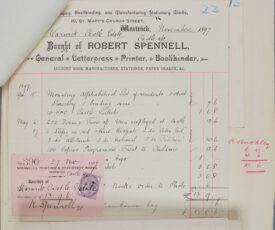
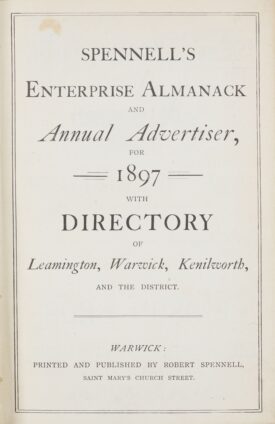
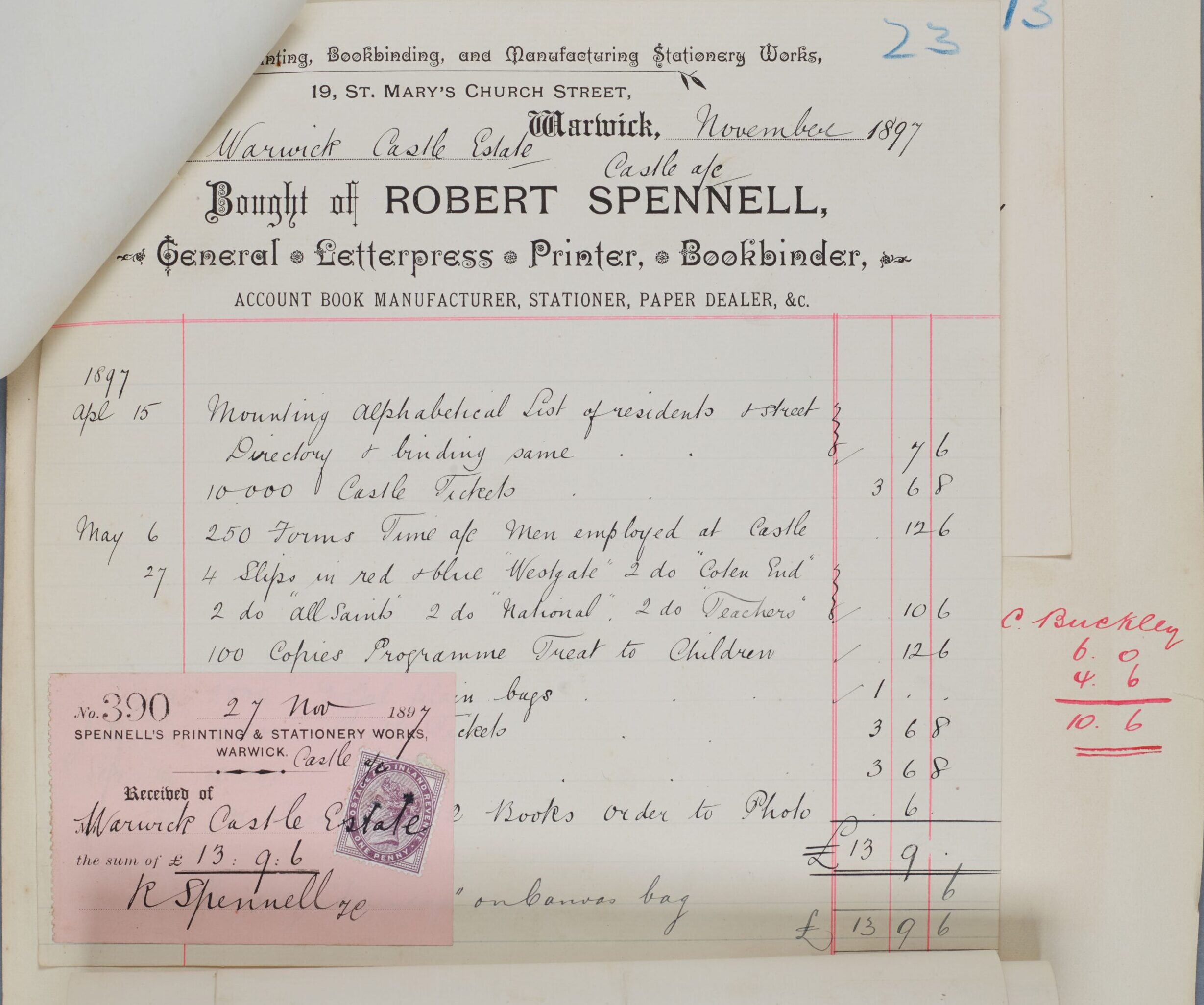
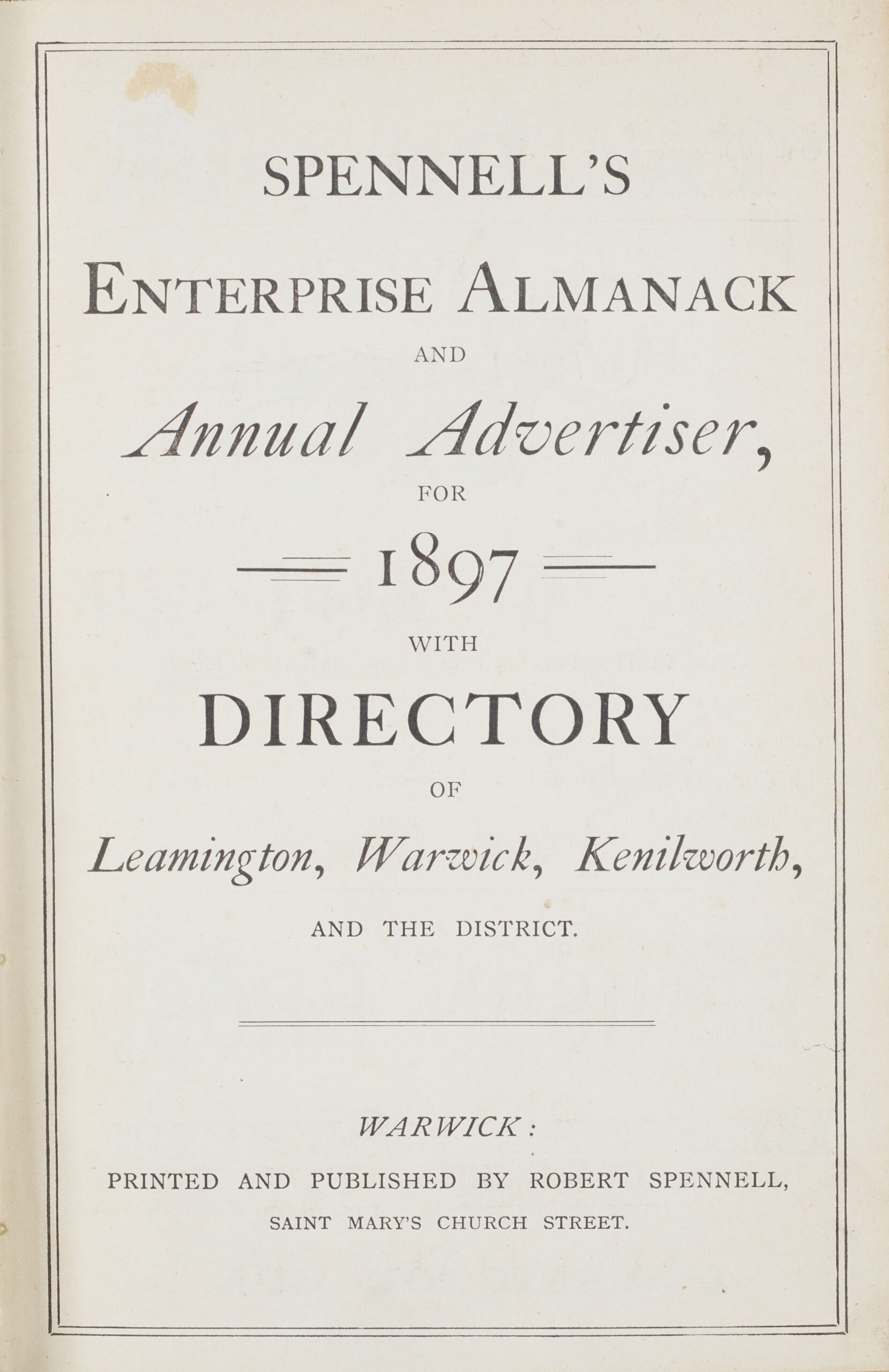
Robert Spennell is remembered for the Spennell’s Directory, written and printed in the late Victorian period. Spennell’s Directory listed trades, businesses and addresses in Warwick, Leamington and Kenilworth. Before the days of internet searching, directories like these were extremely helpful. Today they can also be useful to historians, who want to learn about this area in the past.
As well as printing an annual directory, Robert Spennell printed a range of other items. Records show he was chosen to print souvenir programmes for a children’s party held at the castle to celebrate Queen Victoria’s Diamond Jubilee. He also taught a number of apprentices how to become a master printer like himself. Apprenticeship agreements for seven young boys still exist.
A second career
Being a printer and stationer was a second career for Robert. He and his wife Ellen had been teachers first. In 1860 Robert was working as a master at a British Day School. Unfortunately, we don’t know where Ellen taught. Perhaps Ellen and Robert met while teaching at the same school?
British Day Schools were run by a society that supported schools that were affordable and not linked to a church. They competed with National Schools that were supported by the Church of England. Records don’t tell us the location of the Warwick British Day School.
Before the 1870 Education Act, schools in England and Wales were run by a range of different organisations or individuals. People ran small private schools to make a living, often from their own homes. The Education Act established a standardised school system with local school boards to run schools and inspect them.
His personal interests
Newspaper articles give us a glimpse of Robert Spennell’s personal interests. A report of a meeting of the Warwickshire Naturalists and Archaeologists Field Club show he was a member. The meeting was held at the Market Hall Museum, which had opened nearly 60 years before.
This article is part of the Through the Shop Window trail showcasing the links between Warwick businesses and Warwick Castle in the 1800s. Supported by The Friends of Warwickshire County Record Office, The Steven Wallsgrove Legacy and Warwick Town Council.





Comments
Add a comment about this page