

I was the first woman to hold the position of head green keeper probably in the world! Green keeping was very much a ‘man’s world’ in the 1970s. At this time there was little interest in women in sport. There was a women’s cricket team that won the world cup in the 1970s but received little or no coverage on TV – no women’s football teams to be heard of – in fact it was so unfair women didn’t even get equal pay. But I did! I was earning the same wages as a male green keeper and in charge of ‘a team of men’ – fair play to the district council who had tiers for positions irrespective of gender.
Looking for a job that was outside
After having worked as an office clerk, receptionist and telephonist, and multiple other office roles in different companies I decided I needed to be outside, and a friend recommended me to Warwick District Council (WDC).
I took a trainee/apprenticeship with WDC. and my third year was sports i.e. golf, cricket, football, bowling greens. I went for bowling greens. I was promoted in my first year to assistant green keeper, this was 1977. I had passed all my exams with distinction and came second in the country in order of merit. After that, in 1978, I became the assistant head green keeper for WDC, and by 1988 I had been appointed as the first lady head green keeper.
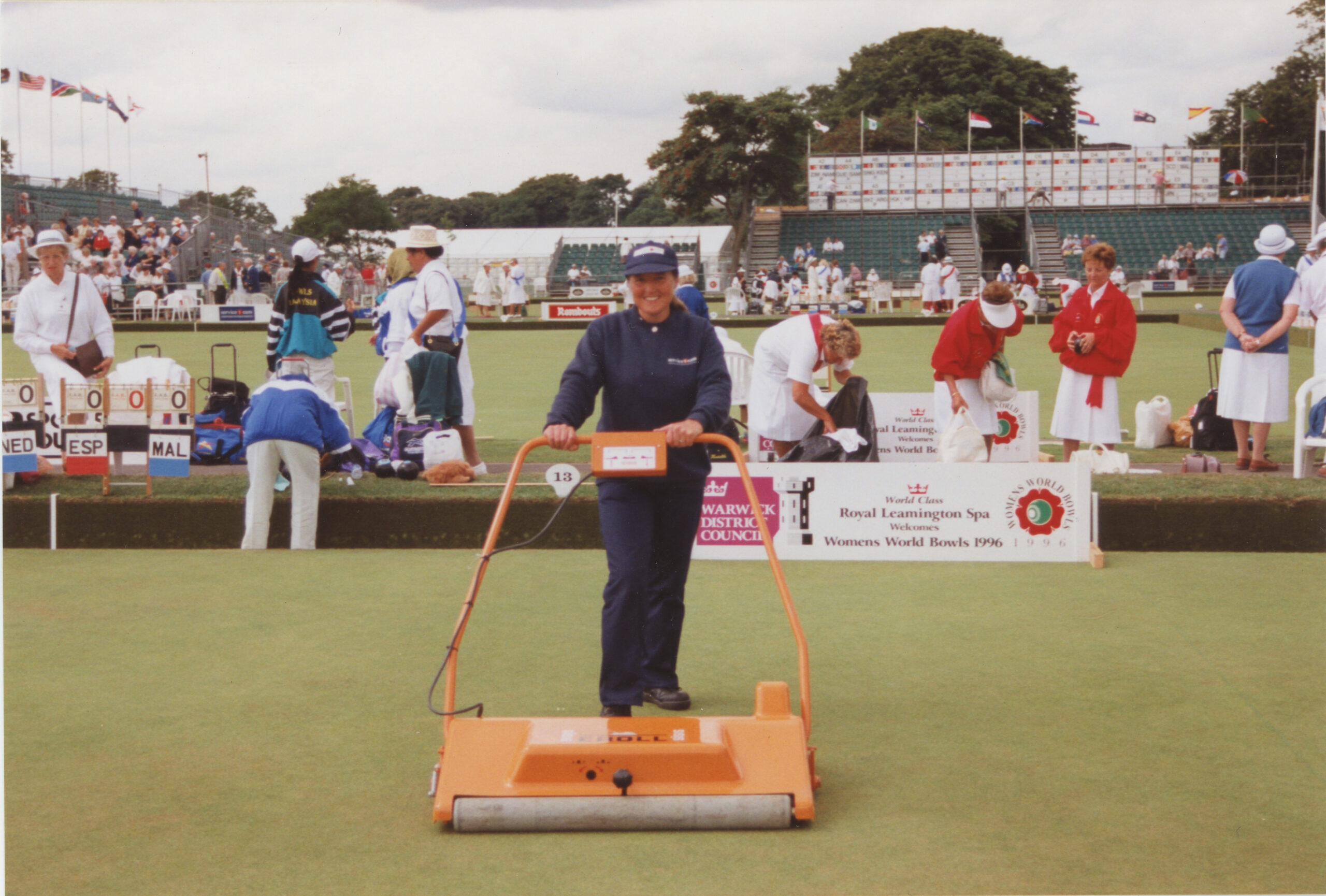
It was really great; Victoria Park is a lovely place to work in at any time of the year. We maintained the whole park and river walk as well as the bowling greens. The people that used the park were very nice and pleasant. I also worked with a fantastic team of lads. In 1996 the World Bowls Championships came to Leamington, which meant I was the first lady green keeper to host them in the UK.
The opening ceremony of the World Bowls Championship
For the opening ceremony, the whole of the town celebrated with window dressings and paraphernalia, all the world countries had their flags displayed around the greens and in the town. It was the sense of achievement of a job well done. We had to build a fifth green to accommodate World Bowls. WDC employed the company to dig the sub-structure and drainage then all the green staff at the bowling greens and golf courses built the green. We had a problem with ‘Take all Patch’ going crazy on the new grass. WDC sent for the Sports Turf Institute to come and access it. I remember them strolling around coming up with long term solutions. So I stepped in and suggested that we order a fescue mix of grass with no bents in and over seed with that – that worked.
Shortly after that in 1997 I moved to Stoke Bowling Club. The club needed major changes to the greens and over the next five years they improved sufficiently to host the 2002 Commonwealth Games Bowls Championship. In 2007 I retired.
Advice
My advice to any green keepers today would be to keep up to date with all the latest equipment. It is devised to make the job, easier, faster and more effective. There was a lot of new products coming out when I was working, new wetting agents and different chemicals that work with nature. Also use common sense, for example moss has always been a problem on fine turf due to the shortness of the grass. Most green keepers treat at the end of the season; I suggest treating the moss in the summer when it is dry with a moss killer, then attack it again in the autumn and brush scarify it out.
With thanks to Jacky Knightley for her help in producing this article.





Comments
Brilliant article Ben – Roni should have been acknowledged years ago. She is thrilled in reading this tribute to women in sport – against the odds
Add a comment about this page